CALL US NOW
 TEXT US NOW
An ATV crash can change your life in seconds. One wrong turn on a trail near Tahuya or Reiter Foothills, one rollover on private land, and you’re facing surgery bills, missed paychecks, and an insurance adjuster who wants to pay you as little as possible. A Seattle ATV accident lawyer can take that fight off your plate while you focus on healing.
Washington law gives you a limited window to file a claim, and the rules around fault, helmets, and liability waivers are more specific than most riders realize. Whether you were hurt as a weekend trail rider, a passenger on a family ride, or an operator hit by another rider’s carelessness, you have the right to ask who pays for your medical bills and lost wages. Our ATV accident attorneys serve Seattle, Bellevue, Renton, Tacoma, and the rest of King, Pierce, and Snohomish counties on a contingency fee basis. you pay nothing unless we win. Call (206) 447-1425 today for a free ATV accident case review, or keep reading to understand your rights first.
What Counts as an ATV Accident Claim in Seattle?
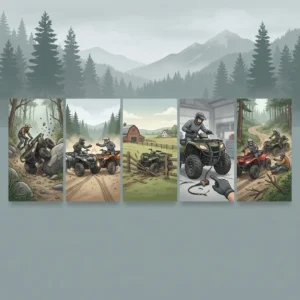
An ATV accident claim covers any injury caused by an all-terrain vehicle, a UTV (side-by-side), a quad bike, or another wheeled off-road vehicle. Washington’s own traffic code groups these under one legal term: “off-road vehicle.” That single legal category matters, because it’s the term insurance adjusters and courts use to decide which rules apply to your crash.
Most Seattle ATV accident lawsuits fall into one of these categories:
- A rollover or collision on a public trail system
- A crash on private property, during a guided tour, or on a rental ATV
- A single-vehicle accident caused by a mechanical defect or missing safety equipment
- A multi-rider collision on a shared trail or road crossing
An ATV & UTV accident lawyer in Seattle looks at where the crash happened, who owned the vehicle, and what caused the loss of control before naming who should pay.
How Common Are ATV Accidents? (Latest Federal Data)
ATV and off-highway vehicle (OHV) accidents kill hundreds of people nationwide every year, and children make up a significant share of the victims. Here’s what the numbers say.
The U.S. Consumer Product Safety Commission’s most recent full OHV report (2024 Report of Deaths and Injuries Involving Off-Highway Vehicles, published May 2025) counted 2,577 reported OHV-related deaths from 2,509 incidents over the 2019–2021 period, of which 1,728 were specifically attributed to ATVs (651 to recreational off-highway vehicles, 57 to UTVs, and 141 unclassified between the two). Relative to 2019, OHV-related deaths jumped 33% in 2020 alone. Riders under 16 accounted for 342 of those deaths 13% of the total and 137 of those child victims, or 40% of them, were under 12. The overwhelming majority of decedents (81%) were male. Rollovers and collisions with another vehicle or a fixed object, like a tree, are the two hazards investigators cite most often in fatal cases, and victims are frequently ejected in these incidents.
Injuries are just as common. U.S. emergency rooms treated an estimated 509,900 OHV-related injuries between 2019 and 2023. an annual average of about 102,000 (this figure covers all off-highway vehicles combined: ATVs, ROVs, and UTVs, not ATVs alone). In the most recent year measured (2023), the head and neck were the most common injury site, accounting for 34% of ED-treated injuries, followed by the arms (25%), torso (19%), and legs (19%). Fractures were the single most common diagnosis (29%). A CPSC follow-up survey of 2023 injury victims found only 29% reported wearing a helmet at the time of their accident.
Locally, Seattle-area riders head to trail systems like Tahuya State Forest in Mason County and Reiter Foothills near Gold Bar for weekend rides and rock crawling. Both are managed by Washington’s Department of Natural Resources, and both see enough rider traffic that rollovers and trail collisions are a recurring cause of ATV injury claims in our area.
Free case review, day or night – call (206) 447-1425 now.
Who Is Liable for an ATV Accident in Washington?
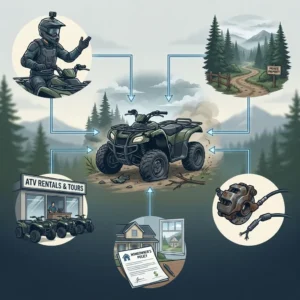
The operator, a landowner or trail operator, a rental company, or an ATV manufacturer can all be held responsible, depending on what caused your crash. Here’s how each one applies.
- ATV operator negligence: A rider who speeds, ignores trail warnings, rides under the influence, or carries too many passengers can be held liable for injuries to others and, if their own carelessness contributed, partly liable for their own losses too.
- Landowner duty of care: A property owner or trail operator who allows ATV use has a duty to warn riders of known hazards and keep the riding area reasonably safe. Failing to mark a hazard or maintain a trail can create landowner liability.
- Rental company and liability waivers: If you were hurt on a rented ATV, a signed liability waiver does not automatically block your claim. Washington courts look at whether the waiver was clear, whether the company was grossly negligent, and whether the equipment itself was defective.
- Manufacturer defect: A defective throttle, brake system, or roll cage can make the manufacturer liable under product liability law, separate from anything the rider did.
- Homeowner’s insurance: If your accident happened on private property, the landowner’s homeowner’s insurance policy may cover your medical bills and lost wages under Washington premises liability law, depending on the policy’s terms.
An experienced ATV accident attorney investigates all five categories before settling for whatever the first insurance offer happens to be. If the insurer denies, delays, or lowballs your claim in bad faith, a Washington IFCA attorney can hold them accountable.
Does Washington’s Comparative Negligence Law Affect My Claim?
Short answer: yes, but being partly at fault does not stop you from recovering money. Washington follows a “pure comparative negligence” rule under RCW 4.22.005.
Here’s what that means in practice. If you’re found 20% at fault for your own ATV accident say, for not wearing a required helmet and your total damages are $100,000, you can still recover $80,000. Washington reduces your payout by your percentage of fault; it does not erase your claim, even if you’re found more than half responsible. Insurance companies often use comparative fault arguments to push down settlement offers, so it pays to have a Seattle ATV accident attorney push back on an inflated fault percentage before you accept a number.
Do I Need a Helmet or Permit to Ride an ATV in Washington?
Usually yes to both, and skipping either one can affect your claim.
Washington’s off-road vehicle helmet law (RCW 46.09.470) requires a securely fastened motorcycle helmet on nonhighway roads, unless your ATV has seat belts and a roll bar, or an enclosed cab, or you’re riding on land you own. Riders under 16 also can’t legally operate an off-road vehicle on or across a highway or nonhighway road without direct supervision from a licensed adult 18 or older (RCW 46.09.460). Most off-road vehicles also need a current ORV registration or use permit to operate legally in the state (RCW 46.09.440).
If you weren’t wearing a helmet when you were hurt, don’t assume that ends your case. Under Washington’s comparative negligence rule above, it may reduce your payout, but it will not automatically disqualify your claim.
How Long Do I Have to File an ATV Accident Lawsuit in Washington?
Short answer: three years from the date of the accident, in most cases.
Washington’s statute of limitations for personal injury claims, including ATV accidents, is three years under RCW 4.16.080(2). Miss that deadline, and Washington courts will almost always refuse to hear your case, no matter how strong your evidence is. Some situations such as claims involving a minor, a government entity, or a delayed diagnosis can shift that deadline, so it’s worth confirming your specific timeline with an attorney rather than assuming the standard three years applies to you.
Free case review, day or night – call (206) 447-1425 now.
What Compensation Can I Recover After an ATV Accident?
Economic damages include:
- Emergency treatment, surgery, and rehabilitation costs
- Future medical care for long-term injuries
- Lost wages during recovery
- Reduced future earning capacity if you can’t return to the same work
- Property damage to your ATV or gear
Non-economic damages include:
- Pain and suffering
- Emotional distress
- Loss of enjoyment of activities you did before the accident
- Scarring and disfigurement
- Loss of consortium for the effect on your family relationships
If your ATV accident led to a family member’s death, a wrongful death claim can also recover funeral costs, lost financial support, and the loss of that person’s companionship.
What Should I Do After an ATV Accident in Seattle?
Short answer: get medical care first, document everything you can, and avoid giving a recorded statement to any insurance company before you talk to a lawyer.
- Get checked by a doctor, even if you feel fine. Adrenaline hides pain, and a head or spinal injury can take hours to show symptoms.
- Photograph the scene, the ATV, the trail or property, and your injuries, if you’re able to safely do so.
- Get names and contact information from any witnesses.
- Report the accident to the property owner, trail authority, or, if applicable, local law enforcement.
- Keep every medical bill, repair estimate, and pay stub showing missed work.
- Talk to an ATV accident attorney before accepting any settlement offer from an insurance company.
Why Work With Elsner Law Firm?
Elsner Law Firm takes ATV accident cases across Seattle, Bellevue, Renton, Tacoma, Federal Way, Bothell, Kirkland, Everett, Redmond, Sammamish, and Woodinville. We handle the insurance negotiation, gather the evidence your ATV insurance claim needs police or ranger reports, vehicle inspection records, and medical documentation and prepare every case as if it’s headed to court, because that preparation is what gets fair settlement offers in the first place.
We work on a contingency fee basis: no fee unless we win your case. Case evaluations are free, and we’re available 24/7, because ATV accidents don’t wait for business hours and neither do we.
Frequently Asked Questions
Is an ATV accident considered a motor vehicle accident?
Yes, for your legal claim. Washington applies the same negligence and personal injury rules to an ATV crash as it does to a car or motorcycle crash. Where it gets more specific is insurance: Washington’s vehicle code puts ATVs in their own category, called an “off-road vehicle” (RCW 46.09), and most standard auto policies follow that same line by excluding off-road vehicles from coverage.
Does auto insurance cover ATV accidents?
Usually not under a standard auto policy. Most personal auto insurance policies exclude off-road and recreational vehicles, so ATV coverage typically comes from a separate ATV or off-road vehicle policy, a homeowner’s policy (if the accident happened on the policyholder’s land), or the at-fault party’s liability coverage. Check your specific policy language, since exclusions vary by insurer.
What percentage do most accident attorneys charge?
Most personal injury and ATV accident attorneys, including our firm, work on a contingency fee, typically around 33% of the settlement or verdict, though the exact percentage can vary by firm and by whether the case settles or goes to trial.
Can I still recover damages if I wasn’t wearing a helmet?
Yes. Washington’s pure comparative negligence rule (RCW 4.22.005) means a missing helmet may reduce your payout by your percentage of fault, but it does not automatically bar your claim.
What’s the difference between an ATV and a UTV for a legal claim?
Not much, legally. Washington’s off-road vehicle statutes cover ATVs (straddle-seat, four-wheel vehicles), UTVs or side-by-sides (bench or bucket-seat vehicles with a steering wheel), and other off-road vehicles under the same general rules for permits, helmets, and liability.
Get Your Free ATV Accident Case Review
You don’t have to figure out Washington’s fault rules, insurance exclusions, and filing deadlines on your own. See if you have a case with a free, no-obligation consultation or call (206) 447-1425 right now for a free case review with a Seattle ATV accident lawyer. We serve riders and families across Seattle, Bellevue, Renton, Tacoma, and the surrounding Puget Sound area, and we don’t get paid unless you do.
Free case review, day or night – call (206) 447-1425 now.