CALL US NOW
 TEXT US NOW
Bellevue Motorcycle Accident Lawyer
You’re riding home on NE 8th St. A driver turns left across your lane and says they “never saw” the motorcycle. Now you have a broken wrist, road rash and a bike that won’t start. A few days later, the insurance adjuster calls. They don’t ask how you’re healing. They ask if you wore a helmet and how fast you were going.
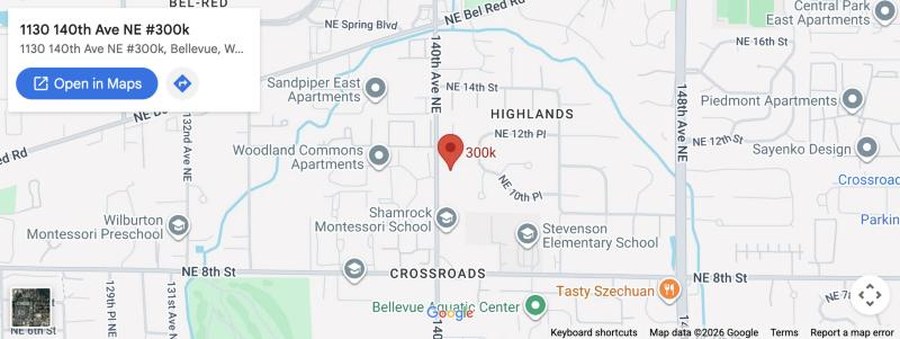
That’s rider bias. Many riders run into it after a motorcycle crash. Elsner Law Firm, PLLC helps riders and passengers hurt in Bellevue answer it. We’ve guided people through Washington injury claims since 2007, and our Bellevue office is at 1130 140th Ave NE, Suite 300K.
In a left-turn accident, the turning driver often has the duty to yield. But the other driver’s insurer has every reason to blame you. Justin Elsner and his team step in so you don’t have to argue with them while you heal. We investigate what happened, review every insurance policy that might apply and build a claim that answers the blame before the adjuster raises it.
Some claims get complicated fast. More than one car or insurer may be involved. Fault may be disputed. You may have had an old back or neck injury before the crash. Justin and his team are ready for those claims.
We can’t promise a result. We can promise a clear plan and a team that keeps you informed. Talk to a Bellevue motorcycle accident attorney about your options. Call (425) 409-0305 for a free consultation. There’s no fee until we recover money for you. You can also see how we help across the Eastside on our Bellevue personal injury lawyer page.
Washington Motorcycle Laws That Affect a Bellevue Rider’s Claim
A few Washington laws come up in almost every motorcycle claim. Insurers use them to shift blame to the rider. Knowing what they really say helps you see where your claim stands.
Helmet law. Washington requires riders and passengers to wear a helmet with the chin strap fastened (RCW 46.37.530(1)(c)). If you weren’t wearing one, the insurer may argue that it made a head injury worse. That argument can reduce what you recover for that injury. It does not bar your claim. Washington’s pure comparative fault rule (RCW 4.22.005) reduces your recovery by your share of fault, if any. It doesn’t erase it. Our guide to Washington helmet law and your injury claim goes deeper.
Lane use and lane splitting. A motorcycle is entitled to the full use of a lane. Drivers may not crowd a rider out of it (RCW 46.61.608). The same law prohibits lane splitting, which means riding between lanes or between rows of vehicles. If a driver drifted into your lane and hit you, that driver may have broken this rule. If the insurer claims you were splitting lanes, the evidence decides that question, not the adjuster.
Motorcycle endorsement. Riders need a motorcycle endorsement on their license (RCW 46.20.500). Riding without one is a traffic infraction. Insurers sometimes raise it to make a rider look careless. But a licensing problem is a separate issue from how the crash happened. On its own, it doesn’t show who caused the crash. We look at what each driver actually did on the road.
Deadlines. Most injury lawsuits in Washington must be filed within three years of the crash (RCW 4.16.080(2)). When a rider dies, the family’s wrongful death action falls under RCW 4.20.010. Our page on wrongful death claims explains how those cases work.
How these rules play out. Picture a driver who changes lanes on I-405 without checking a mirror and clips your bike. You were in your lane and wearing a helmet. The insurer may still say you were speeding or riding in the driver’s blind spot. Lane-use law and the evidence answer that. Now picture a rider without a helmet who suffers a head injury and a broken leg. The helmet argument may touch the head injury. It shouldn’t touch the leg.
Three years can feel like a long time. It isn’t. Witnesses move. Video is overwritten. Bikes get repaired or scrapped. The earlier your claim is built, the more of that evidence is still there.
The Insurance Gap Riders Don’t Expect
Many riders learn about this gap only after a crash. Washington’s insurance rules don’t protect motorcycle policies the way they protect car policies. That can leave you with less coverage than you thought.
Underinsured motorist (UIM) coverage. Washington requires insurers to offer underinsured and hit-and-run coverage on car policies. But that rule excludes injuries suffered “while operating or occupying a motorcycle” (RCW 48.22.030(2)). So your motorcycle policy may or may not include UIM. It depends on what you bought. Check your declarations page, or let us check it with you.
Personal injury protection (PIP). Insurers must offer PIP on “automobile” policies (RCW 48.22.085). The law defines “automobile” as a passenger car (RCW 48.22.005(1)). A motorcycle doesn’t fit that definition. Whether any PIP applies to you after a motorcycle crash depends on the terms of your own policies, including any car policy you carry.
Why it matters. The at-fault driver in Washington only has to carry 25/50/10 liability coverage (RCW 46.30.020 and RCW 46.29.090). That means up to $25,000 for one person’s injuries, up to $50,000 total for everyone hurt in the crash and $10,000 for property damage. For one injured rider, that minimum is often far below the medical bills. If the driver carries only the minimum and you have no UIM, there may be little left to pay for surgery, therapy and lost work.
That’s why the insurance review comes early in every claim we take. We look for every policy that might apply. That can include the at-fault driver’s policy, a second driver’s policy if more than one car was involved, and your own car and motorcycle policies. When more than one insurer is involved, each one will try to point at the others.
The insurance adjuster on the other side won’t explain any of this to you. Their job is to close the claim for as little as possible. They may ask for a recorded statement, your medical records or even your tax returns. You don’t have to answer those requests alone.
We won’t guess what your policy covers. We’ll read it with you and explain what we find in plain words.
Where Bellevue Motorcycle Crashes Happen
Bellevue’s busiest roads are hard on riders. Fast merges, sudden stops and drivers who don’t look twice create the same kinds of crashes again and again.
I-405 express toll lanes. The I-405 express toll lanes run between Lynnwood and Bellevue, with a direct-access ramp at NE 6th St. WSDOT lets motorcycles use them toll-free with a motorcycle pass. But drivers cut in and out of those lanes at speed. A driver who makes a lane change into the express lanes, or merges near the NE 6th St ramp, may not see a rider until it’s too late.
SR-520 and I-90. SR-520 and I-90 carry Eastside commuters toward Seattle, Mercer Island and Issaquah. Stop-and-go traffic is common at rush hour. A rear-end bump that dents a car can throw a rider to the pavement. Crashes on these highways are usually investigated by the Washington State Patrol.
City streets. NE 8th St and Bel-Red Rd are busy arterials with long signal cycles. A left-turn accident at a signal is one of the most common ways riders get hurt. The driver waits for a gap, misjudges the speed of an oncoming motorcycle and turns. Sound Transit’s 2 Line light rail opened on April 27, 2024, with stations at Wilburton, Spring District, BelRed and Bellevue Downtown. Riders now share new crossings with trains and with people walking to stations.
What the city’s numbers show. Bellevue’s Vision Zero program found that 68% of fatal and serious-injury collisions happen on just 8% of city streets. The city calls those streets its High Injury Network. Its Vision Zero progress report counted 22 people killed and 232 seriously injured in Bellevue traffic crashes from 2015 to 2024. Those figures cover all crashes, not only motorcycles. They show that serious crashes cluster on a short list of roads.
Why the location matters. Where you crashed decides who wrote the report and which agency holds the photos and measurements. It also shapes the insurer’s story. On I-405, they may say you were in a blind spot. At a signal, they may say you ran a yellow light.
Location doesn’t decide the claim. It tells us where to look first, and where to find witnesses and video before they’re gone.
Motorcycle Injuries and What a Claim Can Recover
A rider has no doors, no roof and no airbags. So a crash that would dent a car can change a rider’s life. The injuries are often serious, and the recovery is often long.
Common rider injuries. Road rash happens when skin scrapes across pavement. Deep road rash can need skin grafts and leave scars. Our guide to treating road rash covers the early steps. Broken bones in the wrists, legs, collarbone and pelvis are common too. Head injuries can happen even with a helmet. Learn more about traumatic brain injury claims. A hard landing can also damage the spine. See our page on spinal cord injury claims.
Emergency care on the Eastside. Overlake Medical Center at 1035 116th Ave NE is the Eastside’s first Level III Trauma Center. Get checked even if you feel “mostly fine.” Insurers look for gaps in treatment and use them to say you weren’t really hurt.
What a claim can include. A motorcycle claim is meant to cover what the crash took from you. That can include:
- Medical bills, from the ambulance to surgery and therapy
- Future care you’re likely to need
- Lost wages, and lost earning capacity if you can’t return to the same work
- Damage to your bike, helmet, jacket and other riding gear
- Pain and suffering, and the parts of life you can’t enjoy the way you did before
Washington doesn’t cap pain and suffering damages in ordinary injury cases. The state Supreme Court struck down the cap in Sofie v. Fibreboard Corp. in 1989.
Future costs matter most. A settlement usually closes your claim for good. If you’ll need more surgery or time off later, that belongs in the claim now. That’s why we wait until the medical picture is clear before we value a claim.
Every claim is different, so we don’t quote averages as promises. Our motorcycle accident settlement guide and our page on average motorcycle settlements in Washington explain what moves a claim up or down. Results depend on the facts of each case.
The real goal is simple: getting you back to work, back to your family and, if you want, back on your bike.
How Elsner Law Firm Builds a Bellevue Motorcycle Claim
You shouldn’t have to prove you’re a careful rider while you’re still in pain. But rider bias means the insurer will start by assuming you weren’t. Our job is to answer that with evidence, so the claim is about what the at-fault driver did.
We gather the evidence early. We collect scene photos and witness statements. We look for dashcam video and footage from nearby businesses before it’s recorded over. We inspect your helmet, gear and bike, because the damage often shows how and where the impact happened.
We get the official reports. For crashes on Bellevue city streets, we request the Bellevue Police collision report through the city’s Public Records Center. For crashes on I-405, SR-520 and I-90, the report usually comes from the Washington State Patrol through its WRECR system. Adjusters often read the report first, so we read it closely too.
We answer the fault arguments. Insurers often say the rider was speeding, weaving or hard to see. We look at your lane position and the other driver’s duty to yield. When speed is disputed, we use crash reconstruction where it’s needed. If the insurer still claims you share the blame, comparative fault reduces a recovery. It doesn’t end the claim.
We handle the insurers for you. Justin and his team take the calls, answer the requests for recorded statements and records, and keep the claim moving. You’ll always know who to call and what comes next. That leaves you free to focus on treatment and on getting back to normal life.
Who you’ll work with. Justin Elsner (WSBA #39251) has practiced in Washington since 2007. He holds an Avvo 10.0 rating. Our clients have left 136 Google reviews at 5.0 across our 4 profiles.
If you were hurt in a car rather than on a bike, see our Bellevue car accident lawyer page. For riders across the state, our Washington motorcycle accident lawyer guide covers the bigger picture.
Your first step is a free consultation. We’ll listen, look at the insurance involved and explain your options. There’s no fee until we recover money for you.
Bellevue Motorcycle Accident FAQs
Here are short answers to questions Bellevue riders ask us most.
Should I hire a lawyer for a motorcycle accident?
Not every crash needs a lawyer. A lawyer matters most when you’re seriously hurt, when the driver or insurer blames you, or when the at-fault driver’s limits are low. Many riders search for a “motorcycle accident lawyer near me” in the first week. A free consultation can help you decide.
Can I recover if I wasn’t wearing a helmet?
Yes. Washington’s helmet law requires one (RCW 46.37.530), and the insurer may argue that skipping it made a head injury worse. Under comparative fault (RCW 4.22.005), that can reduce your recovery. It doesn’t bar the claim. The helmet argument generally has nothing to do with injuries like a broken leg.
Is lane splitting legal in Washington?
No. Washington prohibits lane splitting, which means riding between lanes or rows of vehicles (RCW 46.61.608). The same law gives a motorcycle the right to the full use of its lane. If the insurer says you were splitting lanes, the evidence decides that question. We look at photos, witnesses and damage to show where you were.
What percentage does an accident lawyer take?
We work on a contingency fee. That means there’s no fee until we recover money for you. We also front the case costs, so you pay nothing upfront. You’ll see the fee terms in writing before you sign anything. We’re happy to walk through how the fee works during your free consultation, so there are no surprises later.
Does my insurance cover me on a motorcycle?
It depends on your policies. Washington’s rule requiring insurers to offer UIM excludes motorcycle injuries (RCW 48.22.030). The PIP offer rule covers “automobile” policies, defined as passenger cars (RCW 48.22.005). Review your motorcycle and car policies soon after the crash. We can read them with you and explain what we find.
Talk to a Bellevue Motorcycle Accident Lawyer
You got through the crash. We’ll help with the rest, from the first insurance call to the day your claim is closed and you’re back to your normal life.
Tell us what happened in a free consultation. We’ll listen, look at the insurance involved and explain your options and what comes next in plain words. You decide what to do. There’s no fee until we recover money for you.
Elsner Law Firm, PLLC 1130 140th Ave NE, Suite 300K, Bellevue, WA 98005 (425) 409-0305
Call or schedule a free consultation. Learn more about our Bellevue personal injury lawyer team.