CALL US NOW
 TEXT US NOW
Bellevue Truck Accident Lawyer
A box truck drifts into your lane on I-405. Or a semi brakes too late on I-90 near Factoria. In a second, your car is crushed and you’re on the way to the hospital. A few days later, the trucking company’s insurer calls. The adjuster sounds kind and asks for a recorded statement.
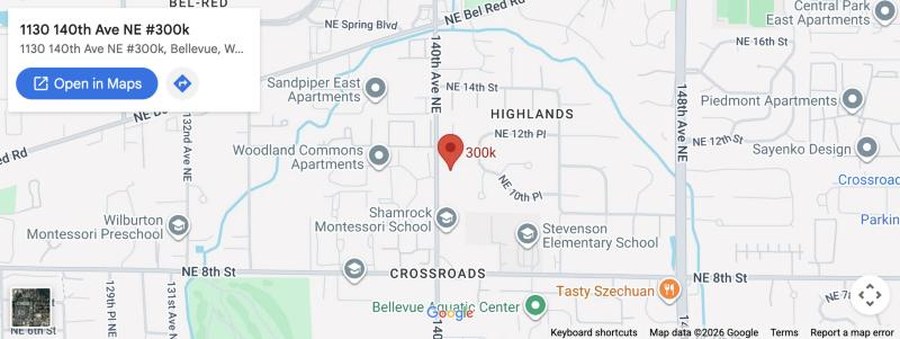
You don’t have to take that call alone. Elsner Law Firm, PLLC helps people hurt in Bellevue truck crashes, and families who lost someone, move from the crash to recovery. Justin Elsner has guided injured people through Washington claims since 2007. Our Bellevue office is at 1130 140th Ave NE, Suite 300K.
A commercial truck accident is not just a bigger car crash. The trucking company and its insurer often start building their side of the story right away. The truck and the company’s systems hold driving logs, electronic engine data and camera footage. Some of that can be overwritten or thrown out if nobody asks to keep it. A spoliation letter is a written demand to preserve that evidence, and it does the most good when it goes out early.
Justin and his team send those letters, deal with every insurer and track the deadlines while you focus on healing. Truck cases often involve more than one company, more than one insurer and a fight over fault. Those are the situations Justin and his team help people sort out.
Call a Bellevue truck accident attorney at (425) 409-0305 for a free consultation. There’s no fee until we recover money for you. You can also see how we help across the Eastside on our Bellevue personal injury lawyer page.
Federal and Washington Rules in a Bellevue Truck Crash Claim
A truck crash claim follows federal trucking rules as well as Washington law. Those extra rules shape who is at fault, how much insurance is available and how fast you need to act. The insurer may treat your claim like an ordinary car case. It isn’t.
Hours of service. Truck drivers can’t drive as long as they want. The FMCSA’s hours-of-service rule (49 CFR 395.3) says a driver hauling property may drive at most 11 hours after 10 hours off duty. The driver also may not drive past the 14th hour after coming on duty. Driver fatigue slows reactions. When logs show a driver broke these limits, that can help prove the driver and the trucking company were at fault.
Insurance limits. For-hire interstate carriers hauling nonhazardous property in vehicles over 10,000 lb must carry at least $750,000 in public liability coverage (49 CFR 387.9). Washington’s minimum for passenger cars is only 25/50/10 under RCW 46.30.020 and RCW 46.29.090. That means up to $25,000 for one person’s injuries, up to $50,000 total for everyone hurt in the crash and $10,000 for property damage. Higher insurance limits matter when injuries are serious. But coverage only helps if someone finds every policy and makes a claim against it. The federal minimum doesn’t apply to every truck, so the type of vehicle and the kind of load both matter.
Fault among several companies. In Washington, the jury assigns a percentage of fault to each entity that caused the harm (RCW 4.22.070). Pure comparative fault applies to you too (RCW 4.22.005). If the insurer says you were partly to blame, your recovery goes down by your share. It doesn’t disappear.
Deadlines. Most injury lawsuits must be filed within three years (RCW 4.16.080(2)). If a government vehicle or a road defect played a part, you must first file a claim and wait 60 days before you can sue (RCW 4.96.020). Those steps take time, so waiting is risky. Evidence problems start much sooner than any filing deadline. Logs and video can be gone long before the three years run out.
Families. When a truck crash takes a life, Washington allows a wrongful death action (RCW 4.20.010). The personal representative of the estate brings it for the spouse and children. If there are none, it can be brought for parents or siblings (RCW 4.20.020).
What this means for you. You may get letters from two or three insurers at once. One wants a recorded statement. Another wants your medical records or tax returns. Each has its own adjuster and its own reasons to pay less. If you were already treating for an old back or neck injury, an insurer may blame that instead of the crash. Questions about your own PIP coverage come up too, because it often pays the first medical bills. These rules tell us where to look for coverage and who must answer for the crash. For the statewide view, see our Washington truck accident lawyer page.
Truck Traffic on Bellevue’s Highways and Streets
Heavy trucks and delivery vans share Bellevue’s busiest roads with commuters every day. Where your crash happened tells us which agency investigated it, which report to request and what the other side is likely to argue.
I-405. Vehicles over 10,000 lb are barred from the I-405 express toll lanes at all times, according to WSDOT. So heavy trucks stay in the general-purpose lanes with everyone else. Those are the same lanes where cars merge into and out of the express lanes. A semi with a large blind spot and a car cutting across to an express lane is a risky mix. Commute traffic near downtown can also stop suddenly, and a loaded truck needs far more room to stop than a car.
SR-520 and I-90. SR-520 connects Bellevue with Seattle. I-90 runs past Factoria and Eastgate toward Mercer Island, Seattle and Issaquah. Crashes on these highways are usually investigated by the Washington State Patrol, and you can request the report through its WRECR system. Highway crashes at speed can mean an 18-wheeler accident with a jackknife, or an underride crash where a car slides under a trailer.
City streets. Delivery vans and box trucks make stops along NE 8th St, Bel-Red Rd and the downtown core. Turns are a common danger here. A truck turning right can hit a person walking in the crosswalk or a rider beside it in the blind spot. A delivery truck accident on a city street may look minor to an insurer, even when your injuries are not. These crashes are usually handled by Bellevue Police, and that report comes through the city’s public records office. We also handle delivery truck accidents across the region.
What the city’s numbers show. We won’t guess at truck-only crash counts. Citywide, Bellevue’s Vision Zero program found that 68% of fatal and serious-injury collisions happen on 8% of city streets. In 2024, the city reported 34 serious-injury collisions in its Vision Zero progress report.
Learn more about how collisions with semi trucks happen and why they cause such serious harm.
Who Can Be Liable After a Bellevue Truck Accident
After a truck crash, more than one person or company may be responsible. That means more than one insurance policy may be available to pay for your harm, but each insurer will try to point at someone else.
The truck driver. The driver may have been speeding, tired, distracted or following too closely. Phone records and logs can show what the driver was doing in the minutes before the crash.
The motor carrier. The trucking company that hired the driver can be responsible for hiring, training and supervision. It can also be responsible for schedules that push a driver past safe limits. A motor carrier usually has its own insurance, separate from any coverage tied to the driver.
Cargo loaders and shippers. Improper cargo loading can shift the truck’s weight and cause a rollover or a jackknife. The company that loaded the trailer may share the blame.
Maintenance contractors and parts makers. Worn brakes, bad tires or a failed part can cause a crash. The shop that serviced the truck, or the company that made the part, may be at fault.
Freight brokers, in some cases. A freight broker arranges loads between shippers and carriers. In some cases, a broker’s choice of carrier is part of the claim.
A government entity. If a public vehicle or a dangerous road defect played a part, a city, county or state agency may be involved. Those claims start with the 60-day presentment process under RCW 4.96.020.
How fault is split. Under RCW 4.22.070, the jury assigns each at-fault entity its own percentage. That is why finding every responsible party, and every policy, matters so much. If one company is left out, its share of the blame may go unpaid. When injuries are serious, one policy may not cover everything.
This is the hard part for most families: sorting out which company did what. Justin and his team do that work for you. Our page on semi-truck accident claims explains how carriers and their insurers respond, and which records to ask for first.
Preserving Evidence and Building the Claim
The trucking company has a head start. Its records sit on its own computers, and its insurer may hire people to study the crash right away. Your claim depends on getting the same evidence before it’s gone.
Preservation letters, early. We send a spoliation letter to the motor carrier and others as soon as we can. It asks them to keep the driver’s logs, black box (ECM) data, GPS records, dispatch records, maintenance files and camera footage. Some trucks have a driver-facing camera that records the driver. Read more about driver-facing cameras in trucks and why that footage matters.
Scene and vehicle evidence. Photos of the scene, the vehicles and your injuries help show what happened. Witness names and statements matter, and so does the police or Washington State Patrol report. Keep any dashcam video you have. After a serious crash, the truck may be moved, repaired or sold. We ask that it be kept as it is so it can be inspected.
Medical care from day one. Get checked right away, even if you feel “mostly fine.” Overlake Medical Center is the Eastside’s first Level III Trauma Center. Consistent treatment records show the insurer what the crash did to you. Gaps in care are something insurers look for.
What the claim can recover. A truck injury claim can include medical care, lost income and lost earning capacity. It can also include pain and suffering. Washington doesn’t cap those damages in ordinary injury cases, since the state Supreme Court struck down the cap in Sofie v. Fibreboard Corp. in 1989. A catastrophic injury, like a brain or spinal cord injury, can change what you need for years. Future care belongs in the claim now, because a settlement usually closes the claim for good. Learn more about catastrophic injury claims.
Support for families. When someone dies in a truck crash, the family may bring wrongful death claims for the financial and personal losses that follow.
You don’t need to gather all of this yourself. We do it, and we explain each step as we go.
Why Bellevue Families Work With Elsner Law Firm
After a truck crash, you need someone to explain what happens next and to deal with the insurers while you heal. That’s what we do.
You’ll work with Justin Elsner and his team. The team handles day-to-day contact, so you always know who to call. They handle the trucking company, its insurer and any other insurers involved, so you don’t have to juggle them. Many of our clients have never made an injury claim before. We explain each step in plain words, tell you what we’d do next and let you decide.
Justin has practiced in Washington since 2007 (WSBA #39251). He’s also licensed in Oregon and Idaho, which helps when the carrier or driver is from out of state. He’s admitted to the federal court for the Western District of Washington. Justin holds a 10.0 Avvo rating and was named a Super Lawyers Rising Star in 2016 and 2017. Our clients have left 136 Google reviews averaging 5.0 across our four office profiles.
Your first step is a free consultation with a Bellevue truck accident attorney. We’ll listen, look at the insurance involved and explain your options. Our goal is simple: help you get back to your normal life.
Bellevue Truck Accident FAQs
Here are short answers to the questions we hear most from people hurt in Bellevue truck crashes.
When should I hire a truck accident lawyer?
As soon as you can. Truck logs, engine data and video can be overwritten, so early preservation letters matter. Calling soon also keeps you from giving a recorded statement before you know your rights. A free consultation costs nothing, and you can decide what to do after we talk. Even if you’re not sure you have a claim, it’s worth asking.
How much are most truck accident settlements?
There’s no honest average. Each claim depends on your injuries, who was at fault and how much coverage is available. Many interstate carriers must carry at least $750,000 in coverage under 49 CFR 387.9. Our guide to truck accident settlements explains what moves a claim up or down. We value the whole claim only once the medical picture is clear.
What percentage does an accident lawyer take?
We work on a contingency fee. That means there’s no fee until we recover money for you. We also front the case costs, so you pay nothing upfront. We explain the fee in writing before you sign anything, so you know what to expect when the case ends. Questions about costs are welcome at any time.
How is a truck accident claim different from a car accident claim?
Truck claims involve federal rules, like hours of service limits, plus Washington law. There are often more defendants, such as the carrier, a loader or a broker, and more insurance. A semi truck accident lawyer knows which records to request and from whom. If no truck was involved, see our Bellevue car accident lawyer page.
What if a truck crash killed my family member?
Washington allows a wrongful death claim under RCW 4.20.010 and 4.20.020. The estate’s personal representative brings it for the spouse and children, or, if there are none, parents or siblings. Nothing replaces the person you lost. We can handle the claim and the insurers so your family has room to grieve and plan what comes next.
Talk to a Bellevue Truck Accident Lawyer
Trucking evidence can be overwritten, so the sooner you call, the more we can protect. Tell us what happened in a free consultation. We’ll explain your options and the next steps, and there’s no fee until we recover money for you. Bring any photos, the report number and the insurance letters you’ve received. If you don’t have them yet, call anyway.
Elsner Law Firm, PLLC 1130 140th Ave NE, Suite 300K, Bellevue, WA 98005 (425) 409-0305
Call us or schedule a free consultation. To see everything we do on the Eastside, visit our Bellevue personal injury lawyer page.