CALL US NOW
 TEXT US NOW
Why Seattle shoulder injury victims call Elsner Law Firm
Medical documentation support for urgent care, imaging, orthopedic visits, injections, surgery, physical therapy, pain symptoms, and recovery timelines.
Insurance pushback support when adjusters minimize shoulder pain, call the injury pre-existing, or undervalue work and daily-life limitations.
Accident and liability review for crash reports, incident evidence, medical records, wage loss, and facts connecting the trauma to the shoulder injury.
Washington personal injury focus for people dealing with shoulder injuries after Seattle-area crashes, falls, or preventable incidents.
Free case review by phone at 206-447-1425.
Your shoulder holds your arm in place, lifts your child, reaches for a shelf, and lets you drive to work. When that joint breaks, tears, or dislocates, your entire life changes in seconds. Pain keeps you awake at night. Lost wages stack up every week. Medical bills from MRI scans, physical therapy, and surgery arrive faster than you can open them.
If your shoulder was hurt in a car crash on I-5, a fall at a construction site in King County, or years of repetitive lifting at a Seattle warehouse, you need a legal advocate who understands both the medicine and the money behind your injury.
Elsner Law Firm represents injured workers and accident victims across Seattle, Bellevue, Renton, Tacoma, Federal Way, and all of Washington State. We handle workers’ compensation claims through the Department of Labor and Industries (L&I), personal injury lawsuits in King County Superior Court, and third-party liability cases against negligent parties. Daily commuters. Weekend athletes. Warehouse workers. Construction crews. Nurses pulling double shifts. We fight for every person whose shoulder injury was caused by someone else’s carelessness or unsafe working conditions.
You pay zero attorney fees unless we recover compensation for you. Call Elsner Law Firm at 206-447-1425 for a free shoulder injury case review today.
Why Do Shoulder Injuries in Seattle Require a Lawyer?
Shoulder injuries require a lawyer because insurance companies routinely deny, delay, or reduce shoulder injury claims. The shoulder is the most mobile joint in the human body. Damage to it affects sleep, work, driving, lifting, and basic self-care. That makes it expensive to treat and difficult to prove on imaging alone.
A torn rotator cuff, for example, may not appear on an X-ray. It often requires an MRI to confirm. Insurance adjusters know this. They use diagnostic gaps to argue the tear existed before the accident, or that it is age-related, or that physical therapy alone should be enough.
The Bureau of Labor Statistics reported 81,600 nonfatal workplace injuries and illnesses in Washington in 2023. The state’s injury rate was 3.4 per 100 full-time workers, well above the national average of 2.4. Shoulder injuries account for a large share of musculoskeletal claims, and nearly one-third of all serious workplace injuries involve musculoskeletal disorders like sprains, strains, and tendon tears.
A shoulder injury attorney in Seattle understands how L&I claims work, how personal injury lawsuits move through King County courts, and how insurance defense lawyers try to devalue your claim. That knowledge is the difference between a lowball settlement and full compensation.
Who Is the Shoulder Injury Lawyer at Elsner Law Firm?
Justin Elsner is the founder of Elsner Law Firm. He graduated cum laude from Seattle University School of Law in 2007. He is a member of the Washington State Bar Association, the Washington State Association for Justice (WSAJ), and is admitted to practice in the U.S. District Court for the Western District of Washington.
For nearly two decades, Justin has represented injured people and their families against insurance companies, negligent drivers, and large corporations across King County, Snohomish County, and Pierce County. Learn more about our full team and firm.
Justin’s drive to practice injury law came from personal experience. A close family member was seriously hurt in a car crash. What followed was months of denied claims, delayed treatment approvals, and adjusters who treated a life-changing injury like a line item. That experience became the foundation of Elsner Law Firm: a practice built on the belief that injured people deserve an advocate who fights as hard for them as the insurance company fights against them.
He has authored two client guides: “What to Do After a Shoulder Injury in Washington: A Step-by-Step Guide for Accident Victims” and “5 Costly Mistakes People Make After a Serious Shoulder Injury.” His shoulder injury caseload covers rotator cuff tears, AC joint injuries, SLAP tears, shoulder fractures, dislocations, biceps tendon tears, brachial plexus injuries, and shoulder impingement caused by car accidents, workplace incidents, falls, and defective products throughout the Puget Sound region.
Call or text Elsner Law Firm at 206-447-1425 for a free consultation. You pay nothing unless we win.
What Types of Shoulder Injuries Does Elsner Law Firm Handle?
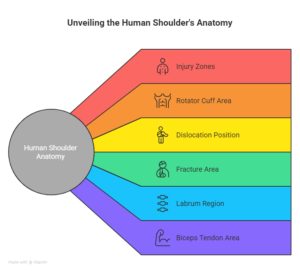
Elsner Law Firm handles every type of shoulder injury caused by accidents, workplace conditions, or defective products in Seattle and Washington State. Below are the most common shoulder injuries we see in personal injury and workers’ compensation cases.
Rotator Cuff Tears
The rotator cuff is a group of four tendons that stabilize the shoulder socket. A tear can happen in a single accident or develop over months of repetitive overhead work. Symptoms include deep aching pain, weakness when lifting, and difficulty raising the arm above shoulder height. Rotator cuff surgery costs an average of $21,800 nationally, with a range of $8,400 to $56,200. Recovery takes 4 to 6 months. The National Safety Council reports shoulder injuries result in an average of 28 days lost from work.
AC Joint Injuries
The acromioclavicular (AC) joint connects the collarbone to the shoulder blade. A hard impact from hitting a steering wheel or falling on an outstretched hand can separate this joint. AC joint injuries cause a visible bump on the shoulder, chronic pain during lifting, and limited overhead reach. Grade 3 through 6 AC separations often require surgical repair.
Shoulder Fractures
Fractures of the clavicle, scapula, or proximal humerus result from high-force impacts. Car accidents, falls from heights, and being struck by heavy objects are the most common causes in King County and across Washington. Severe fractures need surgical fixation with plates, screws, or intramedullary pins. Recovery can take 3 to 6 months, with some patients developing post-traumatic arthritis, see our page on broken bones injuries
SLAP Tears
A Superior Labral Anterior to Posterior (SLAP) tear damages the cartilage ring around the shoulder socket where the biceps tendon attaches. SLAP tears cause clicking, catching, reduced range of motion, and pain with overhead movement. Most require arthroscopic surgery. Return to full function takes 4 to 6 months.
Shoulder Impingement Syndrome
Impingement occurs when soft tissue is pinched between the bones of the shoulder during movement. Repetitive overhead motions at work cause most impingement cases. Without treatment, impingement can progress to a partial or full rotator cuff tear. Construction workers, painters, warehouse employees, and Amazon fulfillment workers in Seattle face high impingement risk.
Shoulder Dislocation
A dislocation forces the humeral head out of the glenoid socket. This causes immediate severe pain and often tears surrounding ligaments, tendons, and the labrum. Once a shoulder dislocates, the risk of repeat dislocation increases by 90% in patients under age 20. Recurrent instability may require surgical stabilization.
Thoracic Outlet Syndrome
Thoracic outlet syndrome (TOS) occurs when nerves or blood vessels between the collarbone and first rib are compressed. Symptoms include pain, numbness, and tingling in the arm and hand. Physical labor with repetitive arm movements is a known risk factor. Severe cases require surgical decompression.
Biceps Tendon Tears
The long head of the biceps tendon connects the muscle to the top of the shoulder socket. A sudden force or chronic overuse can partially or fully tear this tendon. Symptoms include sharp pain at the front of the shoulder, bruising, and a visible bulge in the upper arm known as a “Popeye deformity.”
Brachial Plexus Injuries
The brachial plexus is a network of nerves running from the spinal cord through the neck and into the arm. Damage to this network can cause partial or total paralysis of the shoulder, arm, and hand. Motorcycle accidents, falls, and birth trauma are the leading causes. Severe brachial plexus injuries may require nerve graft surgery or tendon transfer procedures.
Shoulder Replacement Surgery
When damage is too severe for repair, partial or total shoulder replacement (arthroplasty) may be the only option. A total shoulder replacement involves a hospital payment averaging $20,000, plus surgeon, anesthesia, and rehabilitation costs. Recovery takes 3 to 6 months.
Permanent activity restrictions often follow. Patients who need shoulder replacement because of another person’s negligence can pursue compensation for the full cost of the procedure and all related losses.
For a broader overview of injuries we handle, visit our types of injuries page (includes related musculoskeletal conditions like back and neck injuries).
What Causes Shoulder Injuries in Seattle and Washington State?
Shoulder injuries happen in many ways across Seattle, King County, and the broader Puget Sound region. The legal path to compensation depends on how and where your injury occurred.
Car Accidents
Side impacts, rear-end collisions, and T-bone crashes force the shoulder into the door panel, steering wheel, or seatbelt restraint. Even collisions at 15 to 20 miles per hour can tear a rotator cuff or dislocate a shoulder joint. If another driver was at fault under Washington’s negligence laws, you can file a personal injury claim for your full damages, including medical bills, lost wages, and pain.
Workplace Injuries and Occupational Disease
Physical labor, repetitive lifting, overhead reaching, and awkward postures cause shoulder damage over time. Construction workers, warehouse employees, nurses, mechanics, and Amazon fulfillment workers in Seattle and Kent are at the highest risk. A single workplace event, like a fall from scaffolding or being struck by equipment, also qualifies. Both acute injuries and repetitive trauma conditions are covered by workers’ compensation benefits through Washington’s Department of Labor and Industries (L&I).
Slip and Fall Incidents
Wet floors in grocery stores, icy sidewalks in Capitol Hill, broken stairs in apartment buildings, and uneven surfaces in parking lots cause falls that damage shoulders. Property owners in Seattle and King County have a legal duty under Washington premises liability law (RCW 5.40.050) to maintain safe conditions. If they fail, you may have a premises liability claim.
Motorcycle Accidents
Riders thrown from a motorcycle or forced into the pavement often land directly on the shoulder. The absence of structural protection means the full force of impact transfers to the rider’s body. Separated AC joints, fractured clavicles, and brachial plexus injuries are common in motorcycle crashes on Seattle highways and King County roads. Negligent drivers who cause motorcycle collisions are liable for all resulting shoulder damage.
Truck Accidents
Collisions with commercial trucks, semi-trailers, and delivery vehicles produce extreme force. A side impact or rear-end collision with a large truck can crush a vehicle cabin and drive the occupant’s shoulder into the door frame or seatbelt. Shoulder fractures, rotator cuff tears, and dislocations frequently result from truck crashes. Liability may rest on the truck driver, the trucking company, or a third-party maintenance provider, depending on the facts.
Pedestrian Accidents
A pedestrian struck by a car, bus, or truck often hits the ground shoulder-first. Direct impact with pavement can fracture the clavicle, dislocate the shoulder, or tear the rotator cuff. High-traffic areas in downtown Seattle, crosswalks near transit hubs in the University District, and school zones in residential neighborhoods see pedestrian-vehicle collisions regularly.
Construction Site Accidents
Falls from scaffolding, ladders, and elevated platforms are a leading cause of shoulder injuries on job sites across Seattle, Bellevue, and Tukwila. Being struck by falling tools, materials, or crane loads can destroy shoulder structures instantly. Washington employers must follow safety rules enforced by DOSH (Division of Occupational Safety and Health). Workers injured on construction sites can pursue L&I benefits and, if a third party was responsible, a separate personal injury lawsuit.
Bus and Transit Accidents
Sudden stops, collisions, and passenger falls inside King County Metro buses, Sound Transit Link Light Rail trains, and other public vehicles wrench, dislocate, or fracture shoulders. Standing passengers without handholds are most at risk. Government claims in Washington require an administrative tort claim notice with shorter filing deadlines. Contact a shoulder injury attorney immediately if a transit vehicle caused your injury.
Defective Products
Faulty machinery, power tools, or safety equipment that malfunctions can cause shoulder injuries on the job or at home. Under Washington’s products liability law (RCW 7.72), manufacturers and sellers can be held liable through strict liability. You do not need to prove carelessness. You only need to prove the product was defective and caused your injury.
What Workers’ Compensation Benefits Can You Get for a Shoulder Injury in Washington?
If your shoulder injury happened at work or developed from your job duties, you are entitled to workers’ compensation benefits through Washington State’s L&I system. You do not need to prove your employer was at fault. You only need to show the injury is connected to your work.
Medical Treatment Coverage
L&I covers all reasonable and necessary medical care. This includes doctor visits, MRI and CT scans, physical therapy, corticosteroid injections, arthroscopic surgery, open surgical repair, and prescription medications. You must treat with an L&I-approved provider or obtain a referral.
Time-Loss Compensation
If your shoulder injury prevents you from working, L&I pays time-loss benefits. These payments replace a portion of your lost wages during recovery. The amount depends on your wage rate at the time of injury.
Loss of Earning Power (LEP) Benefits
If you return to work but earn less because of your shoulder limitations, you may qualify for LEP benefits. These payments cover the gap between your pre-injury earnings and your current reduced income.
Permanent Partial Disability (PPD) Awards
If your shoulder does not fully heal, you may receive a PPD award. The dollar amount depends on the degree of permanent impairment rated by your treating physician or an independent medical examiner using Washington’s disability rating schedule.
Vocational Retraining
If your shoulder injury prevents you from returning to your previous job, L&I may fund vocational rehabilitation. This can include classroom training, on-the-job training, or an associate degree program to help you qualify for a new occupation.
Total Disability Pension
If your shoulder injury, combined with other medical conditions, leaves you permanently and totally unable to work, you may qualify for a lifetime pension through L&I. Pension eligibility requires medical evidence of total disability.
How to File Your L&I Claim
File your workers’ compensation claim as soon as possible after the injury. You can file by phone at 877-561-3453, online through L&I’s FileFast system, or at your doctor’s office using the Report of Industrial Injury or Occupational Disease form. If you work for a self-insured employer, file directly with your employer’s claims administrator. Document every doctor visit, missed workday, and communication with your claims manager in writing.
What Should You Do If L&I Denies Your Shoulder Injury Claim?
A denied L&I claim does not end your case. It means the dispute has moved to the appeals process. You have the right to challenge the denial, and many denied shoulder injury claims are reversed on appeal.
L&I or a self-insured employer may deny your claim for several reasons. They may argue the injury is not work-related. They may dispute the medical diagnosis. They may blame a pre-existing condition. They may say you filed too late.
Washington law gives you 60 days from the date you receive the denial letter to file a written protest or appeal. If you miss that 60-day window, the denial becomes final and binding. Do not wait.
Step 1: Protest to L&I
Send a written protest directly to the Department of Labor and Industries. L&I will review the original decision and may reverse, modify, or uphold it. During this review, gather additional medical records, obtain a detailed letter from your treating physician, and document exactly how the injury occurred.
Step 2: Appeal to the Board of Industrial Insurance Appeals (BIIA)
If L&I upholds the denial, you can appeal to the BIIA. This is a formal hearing before an industrial appeals judge. Both sides present medical evidence, call witnesses, and submit documentation. Your shoulder injury lawyer will argue why the denial was wrong and why benefits should be granted.
Step 3: Superior Court Appeal
If the BIIA rules against you, you can appeal to Washington State Superior Court. This is the final level of administrative review.
How IME Reports Affect Denied Claims
An Independent Medical Examination (IME) often plays a role in denied claims. L&I or the self-insured employer may send you to a doctor they selected for evaluation. IME doctors sometimes minimize shoulder injury severity or attribute symptoms to age-related degeneration instead of the workplace incident. If an unfavorable IME report led to your denial, your attorney can challenge those findings with your treating doctor’s records, functional capacity evaluation results, and an independent expert opinion.
If your L&I shoulder injury claim was denied, call Elsner Law Firm at 206-447-1425. We review denied claims at no cost.

Can You File a Third-Party Claim on Top of Workers’ Compensation?
Yes. If someone other than your employer or coworker caused your shoulder injury at work, you can pursue a third-party personal injury lawsuit in addition to your L&I claim. This is separate from workers’ compensation and allows you to recover damages that L&I does not cover.
Workers’ compensation does not pay for pain and suffering. It does not pay full lost wages. The PPD award may not reflect your true long-term losses. A third-party claim fills those gaps.
Common third-party scenarios include: A negligent driver caused a crash while you were on the job. A subcontractor’s carelessness on a construction site led to your injury. A defective tool or machine made by an outside manufacturer failed. A property owner’s unsafe conditions caused your fall.
Third-party claims are filed in Washington State Superior Court. Unlike workers’ comp, they allow recovery for pain and suffering, full lost wages past and future, loss of enjoyment of life, and emotional distress. Washington State does not cap non-economic damages in personal injury cases.
Many injured workers do not realize they have a third-party claim. Elsner Law Firm reviews every case for all possible legal paths: workers’ comp, personal injury, and third-party liability.
What Damages Can You Recover in a Seattle Shoulder Injury Claim?
The value of your shoulder injury claim depends on injury severity, how it affects your ability to work, and how it changes your daily life. Damages fall into three categories.
Economic Damages
Economic damages are measurable financial losses. They include past and future medical bills, lost wages, reduced earning capacity, out-of-pocket costs for transportation to medical appointments, home care assistance, and the cost of assistive devices or home modifications. Arthroscopic shoulder surgery alone averages $25,925 nationally, with a range of $6,900 to $31,650. Add physical therapy, follow-up visits, and time off work, and total economic losses can reach six figures.
Non-Economic Damages
Non-economic damages cover the human cost of your injury. They include physical pain and suffering, loss of enjoyment of life, emotional distress, loss of consortium (impact on your spouse or partner), and permanent disability or disfigurement. Washington State does not place a cap on non-economic damages in personal injury cases (RCW 4.56.250).
Workers’ Compensation Benefits
Through your L&I claim, you can recover medical treatment costs, time-loss benefits, PPD awards, vocational retraining, LEP benefits, and total disability pensions. These benefits are separate from and in addition to any third-party personal injury recovery.

How Do Insurance Companies Try to Reduce Your Shoulder Injury Claim?
Insurance adjusters are trained to minimize payouts. Knowing their tactics protects your claim.
Blaming Pre-Existing Conditions
The adjuster may argue your shoulder pain existed before the accident. Washington law (RCW 4.22) protects you. If the accident aggravated or worsened a pre-existing shoulder condition, the at-fault party is responsible for the additional harm. Your attorney uses before-and-after medical imaging and treatment records to prove the accident made your condition worse.
Pressuring a Quick Settlement
Adjusters often offer a fast, low payment before you know the full cost of your injury. Once you accept, you cannot reopen the claim for more money, even if you later need surgery. A rotator cuff repair alone can cost $21,800 on average. Never accept a settlement before consulting an attorney.
Disputing Medical Treatment
Insurers argue that your physical therapy was excessive, your surgery was unnecessary, or your doctor ordered too many imaging studies. Elsner Law Firm documents the medical necessity of every treatment using physician letters, peer-reviewed clinical guidelines, and functional outcome data.
Using Surveillance and Social Media
Adjusters monitor your public social media accounts and may hire investigators to film you. A photo of you lifting a grocery bag can be taken out of context to argue your shoulder functions normally. Be cautious about what you post online after an injury. Set your accounts to private.
Exploiting Gaps in Medical Care
If you missed a physical therapy appointment or waited two weeks to see a doctor, the insurer will argue the gap proves your injury is not serious. Stay consistent with your treatment plan. Document every visit. If you must reschedule, note the reason in writing.
Requesting Recorded Statements
Adjusters may ask you to give a recorded statement about your injury. Anything you say can be used to weaken your claim. You have no legal obligation to provide one. Let your attorney handle all communication with the insurance company.
How Does Elsner Law Firm Build a Strong Shoulder Injury Case?
Every shoulder injury case at Elsner Law Firm follows a structured, evidence-driven process. We prepare every case as if it is going to trial in King County Superior Court.
Phase 1: Medical Evidence Collection
We gather all medical records, diagnostic imaging (MRI, X-ray, CT scan), surgical reports, physical therapy progress notes, and specialist opinions. If needed, we retain independent medical experts to testify about the severity, causation, and permanence of your shoulder injury.
Phase 2: Financial Loss Calculation
We calculate your total economic losses. Past and future medical costs. Lost income. Reduced earning capacity. Out-of-pocket expenses. For workers’ comp cases, we verify that every benefit category is claimed: time-loss, PPD, LEP, vocational retraining, and pension eligibility.
Phase 3: Life-Impact Documentation
We document how your shoulder injury affects your daily routine, family life, hobbies, sleep quality, and mental health. Statements from family members, coworkers, and treating physicians show the full picture of your losses.
Phase 4: Demand and Negotiation
Armed with strong evidence, we present a demand package to the insurance company or opposing party. We negotiate for a settlement that reflects your true damages. We do not accept lowball offers.
Phase 5: Litigation
If the insurer refuses a fair settlement, we file a lawsuit and take your case to trial. Our shoulder injury attorneys prepare every case for litigation from day one. That preparation is what forces fair settlements in most cases before trial.
What Washington State Laws Affect Your Shoulder Injury Claim?
Several Washington statutes directly affect how your shoulder injury claim is filed, valued, and resolved.
Three-Year Statute of Limitations (RCW 4.16.080)
You have three years from the date of your shoulder injury to file a personal injury lawsuit in Washington State. If you miss this deadline, the court will almost certainly dismiss your case. For workers’ comp, report your injury to L&I as soon as possible. Delays in reporting can weaken or destroy your claim.
Pure Comparative Fault (RCW 4.22)
Washington follows pure comparative fault. If you were partially at fault for the accident that injured your shoulder, your compensation is reduced by your percentage of fault. If you are found 20% at fault and your damages total $100,000, you receive $80,000. You can still recover even at 99% fault, though your recovery would be reduced accordingly.
No Cap on Non-Economic Damages
Washington does not cap non-economic damages in personal injury cases. You can recover the full value of your pain, suffering, and diminished quality of life. Many other states impose caps. Washington does not.
Government Claims and Shorter Deadlines
If your shoulder injury was caused by a government employee or agency, such as a King County Metro bus accident or a fall on city property, you must file an administrative tort claim before filing a lawsuit. Government claims have different deadlines and procedures. Failing to follow these rules can bar your entire case. Contact a shoulder injury attorney immediately.
Negligence, Vicarious Liability, and Strict Liability
Depending on the facts, your claim may rest on negligence (someone failed to act with reasonable care), vicarious liability (an employer is legally responsible for their employee’s conduct), or strict liability (a product was defective under RCW 7.72, regardless of fault).
Who Can Be Held Liable for Your Shoulder Injury in Seattle?
The responsible party depends on how your shoulder injury happened. Liability may fall on one or more of the following:
Negligent drivers in car, truck, motorcycle, or pedestrian accidents. Property owners who failed to maintain safe conditions on their premises. Employers through workers’ compensation claims filed with L&I. Third-party contractors on construction sites or shared worksites. Product manufacturers and distributors responsible for defective tools, machines, or safety equipment. Self-insured employers who manage their own workers’ comp programs and may deny or minimize benefits. Government entities responsible for road maintenance, public property safety, and transit operations in Seattle, King County, and across Washington State.
Frequently Asked Questions About Shoulder Injury
How much does a shoulder injury lawyer in Seattle cost?
Nothing upfront. Elsner Law Firm works on a contingency fee basis. You owe no attorney fees unless we recover money for you. The initial consultation is free.
Can you file a workers’ comp claim and a personal injury lawsuit at the same time?
Yes. If a third party caused your workplace shoulder injury, you can pursue both an L&I workers’ compensation claim and a separate personal injury lawsuit. Each covers different categories of damages.
What if your shoulder injury developed over time from your job?
Repetitive trauma and occupational disease qualify for workers’ compensation in Washington. You do not need a single accident event to file. Years of repetitive lifting, twisting, or overhead work can cause rotator cuff tears, impingement, and other shoulder conditions that entitle you to L&I benefits.
How long do you have to file a shoulder injury claim in Washington?
For personal injury lawsuits, the statute of limitations is three years from the date of injury (RCW 4.16.080). For workers’ comp, report the injury to L&I as soon as possible. Late reporting weakens your claim and may result in denial.
Do you need surgery to have a valid shoulder injury claim?
No. Many shoulder injuries, including partial rotator cuff tears, impingement, and AC joint separations, are treated with physical therapy, injections, and activity modification. You can pursue compensation for any shoulder injury that causes pain, limits function, or affects your ability to work.
What is an Independent Medical Examination (IME)?
An IME is an examination by a doctor chosen by the insurance company or L&I. The purpose is to evaluate your injury and sometimes challenge your treating doctor’s diagnosis. You may be required to attend. You have the right to bring someone with you and to request a copy of the report. An experienced shoulder injury attorney can prepare you for the IME and challenge unfavorable findings.
What if the insurance company blames a pre-existing condition?
Washington law protects you. If an accident aggravated a pre-existing shoulder condition, the at-fault party is liable for the additional harm (RCW 4.22). Your attorney uses before-and-after medical records and imaging to prove the accident made your shoulder worse.
How much is a shoulder injury claim worth?
Every case is different. Value depends on medical costs, lost income, pain and suffering, permanence of injury, and daily life impact. Rotator cuff surgery alone averages $21,800. Arthroscopic shoulder surgery averages $25,925. Shoulder replacement cases or claims with permanent disability may be worth significantly more. A free case review with Elsner Law Firm gives you a clearer picture.
What is maximum medical improvement (MMI)?
MMI is the point at which your shoulder condition has stabilized and is not expected to improve further with treatment. Your doctor determines when you have reached MMI. This is the point at which your permanent impairment rating is assigned and your PPD award is calculated in a workers’ compensation claim.
What is a functional capacity evaluation (FCE)?
An FCE is a standardized test that measures your physical abilities after a shoulder injury. It assesses lifting capacity, grip strength, range of motion, and endurance. FCE results are used in workers’ comp cases to determine your work restrictions, earning capacity, and eligibility for vocational retraining or LEP benefits.
Talk to a Seattle Shoulder Injury Attorney Today
Every day you wait can weaken your claim. Evidence fades. Witnesses forget. Statutes of limitations run. The insurance company is already building its case against you.
Elsner Law Firm represents injured workers and accident victims across Seattle, Bellevue, Renton, Kent, Tacoma, Federal Way, and all of King County and Washington State. We handle workers’ compensation claims, personal injury lawsuits, and third-party liability cases under one roof.
You deserve full compensation for your medical bills, lost wages, pain, and the ways this shoulder injury has changed your life. We are here to fight for it.
Call Elsner Law Firm now at 206-447-1425 for a free shoulder injury case review. No fees unless we recover for you.