CALL US NOW
 TEXT US NOW
Bellevue Wrongful Death Lawyer
The phone rings, and no one is ready for that call. Someone you love was hit on I-405, or in a Bellevue crosswalk on the way home. A few days later, while you are still in shock, the insurance calls start. Then the paperwork arrives in their name.
Elsner Law Firm helps Bellevue families who have lost someone in an accident understand a wrongful death claim and what it means for them. A Bellevue wrongful death attorney can explain the law and handle the calls you are not ready to take.
Washington law gives your family a way to hold the responsible person or company accountable. It does not ask you to decide anything today. You can take the time you need to grieve, and learn your options when you are ready.
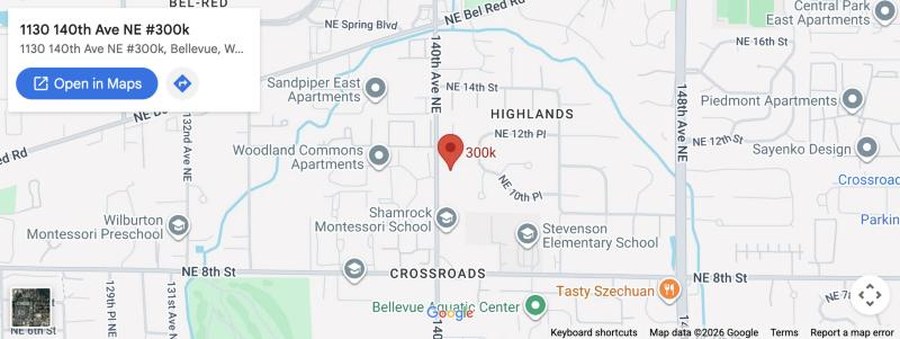
Elsner Law Firm has represented injured people and families in Washington since 2007. Our Bellevue office is at 1130 140th Ave NE, Suite 300K, and we work with families across King County. You can learn more about our Bellevue personal injury lawyer team.
When you want to talk, call (425) 409-0305 for a free consultation. There is no pressure and no fee until we recover money for you.
Wrongful Death and Survival Claims: Two Parts of One Case
A wrongful death case in Washington usually has two parts. One claim is for what your family lost. The other is for what your loved one went through before they died. Both are usually brought together in one case, by the same person, against the same insurers. Knowing the difference helps you understand what the case is really about.
The wrongful death claim. When a death is caused by another person’s wrongful act, neglect or default, Washington allows a wrongful death claim (RCW 4.20.010). The personal representative of the estate brings it on the family’s behalf. It covers the economic and noneconomic damages the family members named in the law suffered because of the death.
This claim applies whether or not the death was also a crime. If the other driver faces criminal charges, your family’s civil claim is a separate case.
The survival action. The claims your loved one had at the moment of death do not end with their life (RCW 4.20.046). The personal representative can recover the estate’s economic losses. For the same family members, the claim can also include your loved one’s own pain and suffering, anxiety and emotional distress before death.
A related law keeps an injury claim alive when the injury caused the death (RCW 4.20.060). The personal representative brings it for the spouse or domestic partner and children, or if there are none, for parents or siblings.
The kinds of cases we handle. This page covers deaths caused by car, truck, motorcycle, pedestrian, bicycle and premises accidents. If you are unsure whether your loss fits, a short conversation can answer that. You do not need to sort out which claim applies before you call. That is part of what we explain.
Who Can Bring a Wrongful Death Claim in Washington
The personal representative of the estate files the case, not each family member on their own (RCW 4.20.010). Any money recovered is for the family members the law names. These family members are called the beneficiaries.
Who the claim is for. The first group is the spouse or state registered domestic partner and the children, including stepchildren (RCW 4.20.020). If there is no spouse, partner or child, the claim is for the parents or siblings.
What changed in 2019. Many families read older information that says parents and siblings must prove they depended on the person for money. Some pages also say they must have lived in the United States. That is no longer the law. A 2019 change to Washington law removed both requirements. It took effect July 28, 2019, and it also applies to older claims that were still open in time.
When a child dies. Parents have their own claim when a child dies (RCW 4.24.010). A parent or legal guardian who regularly supported a minor child may bring or join the claim. So may a parent who had “significant involvement” in an adult child’s life, when that child had no spouse, domestic partner or children. Each parent can recover for their own loss.
Appointing the personal representative. If no one has been named yet, a family member asks the Superior Court to appoint one. In King County, this runs through the King County Superior Court’s Ex Parte and Probate Department. That department hears probate matters. It also approves settlements for minors.
When there is no will, the law sets an order of priority for who may serve (RCW 11.28.120). The surviving spouse or domestic partner comes first, then the children, parents and siblings.
You do not need to have every answer before you call. Justin and his team help families coordinate this step with whoever handles the estate, so the wrongful death claim and the probate filing line up.
Fatal Crashes on Bellevue Roads
Every fatal crash in Bellevue changes a family forever. The city tracks them closely, and its numbers show where serious crashes happen.
What the city reports. Bellevue’s Vision Zero progress report counted 2 traffic deaths and 34 serious-injury collisions in 2024. From 2015 to 2024, 22 people were killed and 232 were seriously injured on city streets. Each of those numbers is a person, and a family left behind. The city’s goal is zero by 2030.
Where they cluster. According to Bellevue Vision Zero, 68% of fatal and serious-injury collisions happen on 8% of Bellevue’s streets. The city calls these streets its High Injury Network.
Who investigates. Bellevue Police handle crashes on city streets. The Washington State Patrol handles I-405, SR-520 and I-90. The family or the personal representative can request the report. Justin and his team can request it for you, from the Bellevue Police records office or the WSP collision records system.
Overlake Medical Center on 116th Ave NE is the Eastside’s first Level III Trauma Center. For some families, it is where the news first comes.
The accidents behind these claims. We help families after:
- A fatal car accident or truck crash. See our Bellevue car accident lawyer and Bellevue truck accident lawyer pages.
- Pedestrian accidents, including a pedestrian accident in a crosswalk near downtown or the 2 Line stations
- Bicycle accidents and motorcycle crashes
- Unsafe property conditions, covered by premises liability law
What a Family Can Recover
A wrongful death claim can recover both the financial losses and the personal ones. No amount of money replaces a person. But the law recognizes what your family lost, and what your loved one went through.
For the family. Under RCW 4.20.010, the family can recover economic damages and noneconomic damages, in amounts the jury finds just. In plain words, that means:
- The financial support your loved one would have provided
- The services they gave the household, from childcare to repairs
- The wages and benefits they would have earned, including pensions
- The loss of their love, guidance and companionship
For the estate. The survival action recovers the estate’s economic losses, such as medical bills and funeral and burial expenses (RCW 4.20.046). It also covers your loved one’s own pain, fear and suffering before death. That recovery goes to the same family members.
When parents lose a child. Parents may recover the child’s health care expenses and lost support and services (RCW 4.24.010). They may also recover for the loss of love and companionship and the injury to the parent-child relationship.
No cap on noneconomic damages. Washington does not cap noneconomic damages in ordinary injury cases. The state Supreme Court struck down the cap in Sofie v. Fibreboard Corp. in 1989.
If your loved one was partly at fault. The insurance company may say your loved one shared the blame. If so, that share is imputed to the claim and reduces the recovery (RCW 4.22.020). It does not bar the claim. Washington follows pure comparative fault (RCW 4.22.005). Learn more about comparative fault in Washington.
Every case is different, so we do not quote averages. Our guide to wrongful death damages in Washington explains each type in more detail. We look at your family’s whole loss before we talk about what a fair recovery means.
Deadlines That Still Apply While You Grieve
Grief has no schedule, but the law does. Most wrongful death claims in Washington must be filed within three years (RCW 4.16.080(2)).
When the clock starts. The three years generally start on the date of death. They do not start when a personal representative is appointed. The Washington Supreme Court said so in Atchison v. Great Western Malting Co. in 2007.
Children do not pause the deadline. Many families assume the clock waits until a surviving child turns 18. It does not. The same case held that the deadline is not paused because a child beneficiary is a minor. If your family has young children, it helps to know this early.
When a public agency is involved. A city vehicle, a public bus or a road defect can add a step. The claim must first be presented to the local government (RCW 4.96.020). A lawsuit cannot be filed until 60 calendar days later. The filing deadline is paused during those 60 days.
These rules generally apply, but your family’s dates depend on the facts. A short call can confirm the statute of limitations for your wrongful death claim, so you can grieve without wondering about a deadline.
How Justin and His Team Help Your Family
After a death, the calls do not stop. Adjusters want a recorded statement. Bills arrive in your loved one’s name. No one tells you who is allowed to sign what.
What we take off your plate. Justin and his team:
- Deal with the insurance company so you don’t have to
- Request the Bellevue Police or WSP report
- Preserve evidence before it is lost
- Identify every insurance policy that may apply
- Coordinate with whoever handles the estate
- Keep your family informed in plain language
Why every policy matters. Washington’s minimum liability coverage is 25/50/10 (RCW 46.30.020 and RCW 46.29.090). That means up to $25,000 for one person’s injuries, up to $50,000 total for everyone hurt in the crash and $10,000 for property damage. That is often far below a family’s loss. So we look for every policy, including a second driver’s or a company’s.
Fees and costs. We work on a contingency fee. There is no fee until we recover money for you. We front the case costs.
Who you will work with. A Bellevue wrongful death attorney should make things lighter, not heavier. Justin Elsner (WSBA #39251) has practiced in Washington since 2007 and is also licensed in Oregon and Idaho. He holds an Avvo 10.0 rating and was named a Super Lawyers Rising Star in 2016 and 2017. Our clients have left 136 Google reviews averaging 5.0 across the firm’s 4 profiles.
The goal is simple. Your family can grieve and rebuild while someone else carries the legal work, and you have help with whatever comes next. It starts with a free consultation.
Bellevue Wrongful Death FAQs
More answers: common wrongful death questions.
What does a wrongful death suit mean?
It is a civil claim for a family’s losses when someone’s wrongful act, neglect or default caused a death (RCW 4.20.010). The personal representative brings it for the beneficiaries the law names. It is separate from any criminal case.
When a husband dies, what is the wife entitled to in Washington state?
In a wrongful death claim, a surviving spouse or state registered domestic partner is a first-tier beneficiary, along with the children (RCW 4.20.020). Who inherits property is a separate probate question, handled through the estate.
Do parents or siblings have to have been financially dependent?
No. Since 2019, parents and siblings are beneficiaries when there is no spouse, domestic partner or child (RCW 4.20.020). They no longer have to prove financial dependence or U.S. residence.
Who pays out wrongful death settlements?
Usually the at-fault person’s or company’s liability insurer. Other policies may also apply, such as a second driver’s. Justin and his team look for every policy that could cover your family’s loss.
How much money can you sue for wrongful death?
There is no set amount. Washington has no cap on noneconomic damages (Sofie, 1989). The jury decides what is just for the family’s losses (RCW 4.20.010, 4.20.020). No one can promise a figure.
How long does it take to settle a wrongful death lawsuit?
It depends on the facts, the insurance and whether a lawsuit is filed. No one can promise a timeline. The statute of limitations is generally three years from the date of death (RCW 4.16.080(2)).
Talk With Our Bellevue Office
When your family is ready, we are here to listen. A free consultation is a quiet, no-pressure conversation about what happened and what comes next.
Elsner Law Firm 1130 140th Ave NE, Suite 300K, Bellevue, WA 98005 (425) 409-0305
Most claims must be filed within three years of the death, so it helps to talk when you can. There is no fee until we recover money for you. Call or schedule a free consultation. For the full guide to Washington law, see our Washington wrongful death lawyer page, or meet our Bellevue personal injury lawyer team.