CALL US NOW
 TEXT US NOW
Bellevue Uber and Lyft Accident Lawyer
You were in the back of an Uber on Bellevue Way. Or a Lyft driver ran into your car on NE 8th St. Now your neck hurts and nobody will say who pays your medical bills. The driver’s insurer calls. The rideshare company’s insurer calls. Maybe your own insurer does too. Each says another policy should pay first.
Here is the reason. In Washington, who pays depends on what the driver’s app showed at the moment of the crash. The law sets different coverage for each stage of a trip (RCW 46.72B.180).
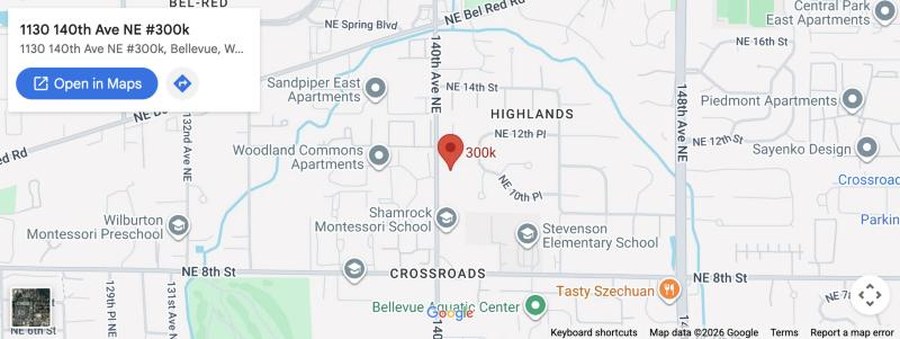
Elsner Law Firm helps people hurt in Uber and Lyft crashes in Bellevue and across the Eastside sort that out. Justin and his team have guided people through Washington injury claims since 2007. Our Bellevue office is at 1130 140th Ave NE, Suite 300K, Bellevue, WA 98005.
We can’t promise a result. We can find every policy, put them in order and deal with each insurance adjuster while you focus on getting back to normal life. Talk to an Uber accident lawyer or Lyft accident lawyer about your options. Call (425) 409-0305 for a free consultation, or learn more about our Bellevue personal injury lawyer team.
Who Pays After an Uber or Lyft Crash in Bellevue Depends on the App
The insurance that applies depends on whether the driver was offline, logged in to the app and waiting, or on a trip. Washington’s rideshare insurance law sets a different minimum for each stage. So the first question is often “what did the app show?”
Uber and Lyft are what Washington calls transportation network companies. When a driver uses a personal car to give rides, the law calls that commercial transportation services (RCW 48.177.005). Before a car can be used that way, it must be covered by a primary insurance policy that specifically covers that work (RCW 46.72B.180). Older articles may cite the old number, RCW 48.177.010.
| App status | Coverage the law requires (RCW 46.72B.180) |
|---|---|
| App off | No rideshare coverage applies. The driver’s own auto policy is the starting point. Washington’s minimum is 25/50/10 (RCW 46.29.090 and RCW 46.30.020). |
| App on, waiting for a ride request | At least $50,000 per person and $100,000 per accident for injuries, $30,000 for property damage, plus UIM and PIP to the extent Washington law requires. |
| Ride accepted, driving to pick up, or passenger on board | $1 million liability coverage for death, injury and property damage combined, plus PIP to the extent Washington law requires. |
The 25/50/10 minimum means up to $25,000 for one person’s injuries, up to $50,000 total for everyone hurt in the crash and $10,000 for property damage. The prearranged ride starts when the driver accepts the request. It ends when the passenger gets out of the car (RCW 48.177.005).
Passengers get extra protection. From the moment you get in until you get out, the policy must carry underinsured motorist coverage of at least $100,000 per person and $300,000 per accident. That matters when the driver who hits the rideshare car has little or no insurance.
The driver’s own policy can drop out. Washington lets personal auto insurers exclude all coverage while the driver is logged in or giving a ride. That personal auto policy exclusion can reach liability, PIP, UIM and collision coverage. If the driver’s own rideshare policy lapsed, Uber or Lyft must provide the required coverage from the first dollar of the claim.
These are minimums. What a policy pays depends on its terms and your injuries. Bellevue has no separate rideshare insurance rules. Since June 9, 2022, the state has handled regulation of rideshare companies and drivers (RCW 46.72B.190). For a side-by-side look, see how a rideshare claim differs from a car accident claim.
How Your Role in the Crash Changes a Bellevue Rideshare Claim
Where you were in the crash changes which insurer you deal with first. Here is how each role usually works.
If you were the Uber or Lyft passenger
You did nothing but get in the car. Yet you’re the one stuck calling insurers.
If the rideshare driver caused the crash, the $1 million ride coverage is usually the main source. If another driver caused it, that at-fault driver’s insurer is first in line. The passenger UIM coverage ($100,000 per person and $300,000 per accident) can fill the gap when that driver carries too little. A rideshare passenger is seldom blamed, so the fight is usually over which policy pays. Read more about whether Uber is responsible for passenger injuries.
If a rideshare driver hit your car
You may not even know the other car was an Uber.
The driver’s app status at that moment decides whether you face the driver’s personal insurer, the 50/100/30 app-on coverage or the $1 million coverage. The rideshare company must give insurers a log of when the driver was logged on and off within ten business days of a request. Justin and his team press the insurers for that record early. See our Bellevue car accident lawyer page, or read about suing a rideshare driver in Washington.
If you were walking or biking
A pedestrian or cyclist hit by a rideshare car faces the same app-status question as another driver. Your own auto policy may matter too, even though you weren’t in a car. Justin and his team review it with you. See our Bellevue pedestrian accident lawyer page for more.
If you were the rideshare driver
You were working, and someone else ran into you. When another driver causes the crash, a rideshare driver can bring an injury claim against that driver’s insurer like anyone else. Your own personal policy may exclude the loss while you were logged in.
What if fault is disputed? Washington reduces, but does not bar, recovery when the injured person was partly at fault (RCW 4.22.005). Learn how Washington comparative fault works.
When More Than One Insurer Is Involved
When more than one insurer is involved, each one has a reason to point at another policy. Washington’s rideshare law sets rules for who goes first. Knowing those rules keeps you from getting stuck in the middle.
Picture three adjusters, three claim numbers and three requests for a recorded statement. Each one also wants your medical records. You’re still in pain, and nobody will commit to paying a bill. This is the kind of claim Justin and his team focus on: more than one car or insurer, disputed fault, pre-existing injuries and PIP questions.
Who pays first. If the driver had been matched with a passenger and was heading to pick them up, or was carrying the passenger, the company that matched the ride must provide the coverage.
Two apps open. Some drivers are logged in to both Uber and Lyft while they wait. If the driver wasn’t matched with a ride yet, liability is split equally among the rideshare policies.
Who defends the claim. The rideshare insurers, not the driver’s personal insurer, defend liability claims from crashes during rideshare service. The companies must also keep trip records for at least as long as the deadline to sue, plus two years.
How the layers stack. Often your own personal injury protection (PIP) pays first for medical bills and lost wages. Then the at-fault policy. Then underinsured motorist (UIM) coverage, which can also apply after a hit-and-run (RCW 48.22.030). When several drivers share fault, Washington divides fault among them (RCW 4.22.070).
When your own insurer says no. If your own insurer unreasonably denies PIP or UIM benefits, Washington’s Insurance Fair Conduct Act may apply (RCW 48.30.015). Read about Insurance Fair Conduct Act claims.
Putting the policies in the right order is where Justin and his team do their most useful work. You shouldn’t have to referee the insurers yourself.
Where Bellevue Uber and Lyft Crashes Happen
Most Bellevue rideshare crashes happen where cars stop, start and turn in heavy traffic. Pickup and drop-off points and fast highway merges are where trips go wrong.
Downtown Bellevue. Drivers pull to the curb, stop short and make quick U-turns to reach a rider. On busy streets like NE 8th St and Bellevue Way, a sudden stop can cause a rear-end crash or put a passenger in the path of a cyclist.
Highway trips. Many rides use I-405, including the express toll lanes and the NE 6th St ramp. Others take SR-520 toward Seattle or I-90 toward Mercer Island and Issaquah. Merges at speed leave little room for error.
Light rail stations. Sound Transit’s 2 Line opened on April 27, 2024. Its Bellevue stations are South Bellevue, East Main, Bellevue Downtown, Wilburton, Spring District and BelRed. Riders now get dropped off and picked up near each one.
What the city’s numbers show. Bellevue’s Vision Zero program found that 68% of fatal and serious-injury collisions happen on 8% of city streets. In 2024, the city counted 2 deaths and 34 serious-injury collisions. Those figures cover all crashes, not only rideshare trips.
What to Do After a Rideshare Crash in Bellevue
The steps you take in the first days protect both your health and your claim. Rideshare crashes leave extra proof on your phone, and it can disappear.
Get medical care first. Overlake Medical Center at 1035 116th Ave NE is the Eastside’s first Level III Trauma Center. Get checked even if you feel mostly fine.
Save the rideshare proof. Take screenshots of the trip receipt, the driver’s name and plate shown in the app, and any in-app crash report. If you’re the driver, screenshot your app status right away.
Get the report. Drivers must stop and exchange information after a crash (RCW 46.52.020). Bellevue Police collision reports come through the city’s public records center. For crashes on I-405, SR-520 and I-90, the Washington State Patrol report comes through WRECR.
Slow down with insurers. Be careful with a recorded statement or a broad medical authorization before you know which policy applies. Any insurance adjuster can use your words later.
Watch the deadline. Most injury lawsuits must be filed within three years (RCW 4.16.080(2)). Our guide on what to do if you are injured in an Uber has more detail.
How Justin and His Team Handle a Bellevue Rideshare Claim
You need someone to handle the insurers while you heal. Justin and his team do that.
We ask the insurers for the driver’s app-status record. We identify every policy: the driver’s, the rideshare company’s, the at-fault driver’s and your own. We answer the adjusters, and we document your injuries and lost income.
There’s no fee until we recover money for you. We work on a contingency fee, and we front the case costs.
Who you’ll work with: Justin Elsner (WSBA #39251) has practiced in Washington since 2007 and is also licensed in Oregon and Idaho. He holds an Avvo 10.0 rating and was named a Super Lawyers Rising Star in 2016 and 2017. Our clients have left 136 Google reviews averaging 5.0 across the firm’s 4 profiles.
Success isn’t only a settlement. It’s you back at work and back to normal life. Results depend on the facts of each case. See rideshare accident claims in Washington for the bigger picture. Your first step with a rideshare accident attorney is a free consultation.
Bellevue Uber and Lyft Accident FAQs
What should you do if your Uber gets in an accident?
Get medical care. Screenshot the trip receipt and the driver’s details. Get the police report. Don’t give a recorded statement until you know which policy applies.
Can I sue Lyft or Uber after an accident?
Usually the claim runs against the driver and the rideshare insurance the company must carry (RCW 46.72B.180). The companies must keep an agent in Washington to accept legal papers (RCW 46.72B.040). See suing Uber or Lyft directly.
Does Lyft compensate for accidents?
Payment comes through required insurance, not a goodwill check. How much coverage applies depends on the driver’s app status at the moment of the crash. A Lyft accident lawyer can help.
How much can you get if your Uber gets in an accident?
It depends on your injuries, fault and available coverage. We don’t quote averages as promises. See Uber accident settlement amounts in Washington.
What percentage do accident lawyers take?
We work on a contingency fee. There’s no fee until we recover money for you, and we front the case costs. An Uber accident lawyer on our team walks you through the terms in writing before you sign.
How long does a Lyft or Uber claim take?
It depends on how long your treatment lasts and how many insurers are involved. We wait until your medical picture is clear before we value the claim. Read about how long a rideshare settlement takes.
Talk to a Bellevue Uber and Lyft Accident Lawyer
You don’t have to sort out the insurers alone. Tell us what happened in a free consultation, and we’ll explain your options in plain words.
Elsner Law Firm, PLLC 1130 140th Ave NE, Suite 300K, Bellevue, WA 98005 (425) 409-0305
Call or schedule a free consultation. Learn more about our Bellevue personal injury lawyer team.