CALL US NOW
 TEXT US NOW
Marijuana-Impaired Driving Accidents in Seattle
Have you been hit by a driver who was high on marijuana? You have the right to file a civil personal injury claim against them, separate from any criminal case, and recover compensation for your injuries, lost wages, and pain. Elsner Law Firm has helped injury victims across Washington pursue exactly this type of claim for over 17 years.
Here is what this guide covers:
- How Washington defines cannabis DUI under RCW 46.61.502
- Why the 5 ng/mL THC limit is not the only way to prove impairment
- What evidence supports a civil marijuana DUI injury claim
- What damages you may be eligible to recover in Seattle
What Does Washington Law Say About Marijuana Impaired Driving?
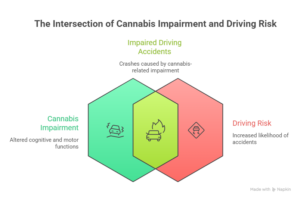
Marijuana impaired driving is illegal in Washington under RCW 46.61.502, even though recreational cannabis is legal. A driver commits a drugged driving accident Washington offense if they have a THC blood concentration of 5.00 ng/mL or higher within two hours of driving, or if they show observable signs of impairment regardless of their measured THC level.
That second standard is important for injury victims. A Drunk Driving Accident Lawyer can help you hold the at-fault driver accountable through a civil claim and recover the full compensation you deserve. A driver does not have to test above the per se limit to be held liable. Slowed reaction time, disorientation, red eyes, or erratic driving are enough to trigger both a criminal charge and civil liability under Washington law.
Washington enacted the 5 ng/mL THC limit Washington DUI after the passage of Initiative 502, which legalized recreational marijuana in 2013. Drivers under 21 face a zero-tolerance standard, meaning any detectable THC in their blood can support a charge. Medical marijuana users receive no exemption. RCW 46.61.502 explicitly states that lawful drug use is no defense against a DUI or a civil injury claim.
You can review the full text of Washington’s DUI statute at the Washington State Legislature’s RCW database.
How Does THC in the Blood Affect a Crash Claim?
THC behaves differently from alcohol in the body, which makes marijuana impairment evidence more complex but not impossible to use in a civil injury case. Unlike alcohol, THC is fat-soluble. It binds to fatty tissue and can remain detectable in the blood for hours or even days after the impairing effects have passed.
This creates challenges for both sides. A driver involved in a crash might test above 5 ng/mL yet argue the effects had worn off. Conversely, a driver might test below the limit and still have been dangerously impaired, especially in cannabis edibles impaired driving crash situations where the THC was still peaking at the moment of impact. Edibles can take 30 to 90 minutes to produce full effects, and their intensity is often unpredictable.
This is exactly why Washington law includes both the per se blood standard and the general impairment standard. A toxicology report marijuana impairment result below 5 ng/mL does not end your civil case. It simply means your attorney needs to build the impairment argument using other available evidence alongside the blood result.
Research supported by the Washington Traffic Safety Commission also confirms that combined alcohol and marijuana impairment crash cases carry significantly higher risk than either substance alone. Poly-drug drivers were involved in approximately 40% of Washington fatal crashes in recent years. When alcohol is also involved, victims may have additional claims against the establishment that served the alcohol under Washington dram shop law.

How Is Drugged Driving Proved in a Civil Case?
You can prove marijuana impairment in a civil injury case using a lower standard of proof than in a criminal court. In a criminal prosecution, guilt must be shown beyond a reasonable doubt. In a civil claim, your attorney only needs to show that it is more likely than not that the driver’s impairment caused your injuries. That is called the preponderance of the evidence standard, and it is meaningfully easier to meet.
Several categories of evidence support a weed DUI accident settlement Seattle claim.
Police reports and arrest records document the responding officer’s on-scene observations. If the driver was arrested for DUID (driving under the influence of drugs), the report will note behavioral indicators such as the smell of cannabis, slurred speech, delayed responses, and poor balance. An arrest itself is strong evidence of negligence, even if the criminal case is later reduced or dismissed.
THC blood test results from a police blood draw at or after the scene provide direct physical evidence. Even a result below 5 ng/mL can demonstrate recent cannabis consumption. Paired with officer observations and crash circumstances, it helps establish impairment at the time of the collision. You can learn more about Washington’s blood testing rules through the Washington State Department of Health.
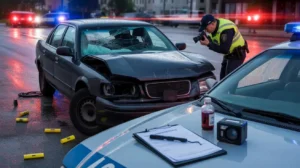
Crash scene evidence also matters. Failure to brake, crossing lane lines, missing a stop sign, or the physical force of impact itself can support an inference of impaired driving when combined with THC evidence.
Witness statements and dashcam footage are among the most powerful tools. If other drivers or pedestrians observed erratic behavior before the crash, or if any camera captured the at-fault driver’s movements, that footage can be decisive in settlement negotiations or at trial.
What Role Does a Drug Recognition Expert Play in Your Injury Claim?
A drug recognition expert (DRE) evaluation is documented professional evidence of impairment that your attorney can use in your civil case. A drug recognition expert DRE Washington is a law enforcement officer trained through a 12-step evaluation process specifically designed to identify drug-related impairment that standard field sobriety tests miss.
The DRE evaluation checks vital signs, pupil size and reaction, muscle tone, body temperature, and a range of behavioral indicators. When this evaluation was performed on the at-fault driver at the scene, the resulting report identifies which category of drugs the officer believes caused impairment, and cannabis has specific, documented physiological markers.
Standard field sobriety tests were designed for alcohol, not THC. Defense attorneys in criminal proceedings often challenge their reliability for marijuana cases. However, in your civil claim, the DRE report stands as independent, expert-documented evidence of impairment. If the evaluating officer found eyelid tremors, a slowed pulse rate deviation, the odor of cannabis, and poor coordination, all of that becomes part of your case record.
If a DRE evaluation was performed on the driver who hit you, your attorney should request that report as early as possible.
What Damages Can You Recover After a Marijuana DUI Crash in Seattle?
If a marijuana-impaired driver caused your crash in Seattle, you may be eligible to recover medical costs, lost wages, and pain and suffering damages through a civil personal injury claim. Washington does not cap non-economic damages in personal injury cases, which means serious injuries can produce substantial settlements or verdicts. Learn more about typical compensation ranges in our guide on Washington Car Accident Settlement Amounts.
Medical expenses cover everything from emergency room treatment and surgeries to physical therapy, medications, and future care costs directly tied to your crash injuries.
Lost wages apply when injuries force you to miss work. If your injuries permanently reduce your ability to earn income, you can also pursue compensation for that lost future earning capacity.
Pain and suffering covers non-economic losses including physical pain, emotional distress, anxiety, and reduced quality of life. These damages are calculated based on the severity and duration of your injuries.
Washington follows a pure comparative negligence system. If you are found partially at fault, your total damages are reduced by your percentage of responsibility. For example, if you were 15% at fault and your total damages were $200,000, you would recover $170,000. Insurance companies routinely try to inflate victim fault percentages to reduce payouts, which is why legal representation directly affects your outcome.
In cases where a driver’s conduct was especially reckless, such as driving with a very high THC level combined with a prior DUI history, additional damages may be available depending on the specific facts of your case.
Why Elsner Law Firm Is the Right Choice After a Marijuana DUI Accident
Elsner Law Firm has represented injury victims across Washington for over 17 years, handling every aspect of cannabis DUI claims from evidence gathering to trial preparation. The firm operates on a contingency fee basis, meaning you pay nothing unless they recover compensation for you.
- No fees unless you win. Elsner Law Firm advances all case costs and charges no upfront fees, removing any financial barrier to pursuing your claim.
- Free consultations, available 24/7. You can call, text, or schedule online anytime. Someone is always available to talk through your case and give you guidance.
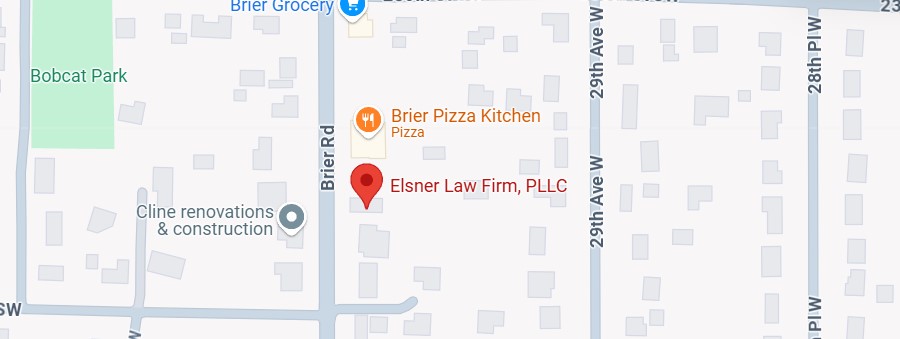
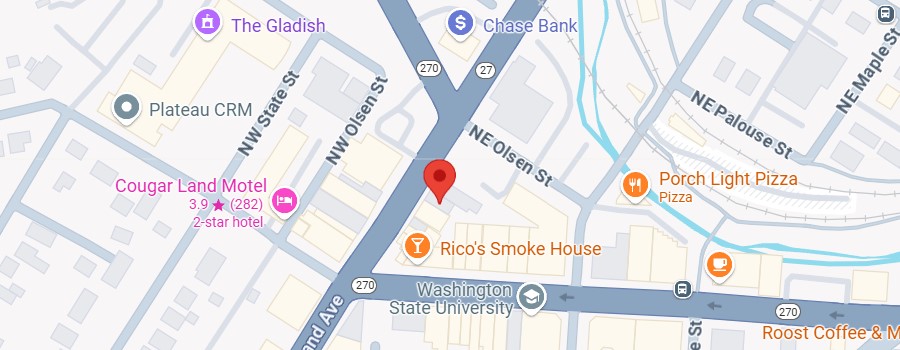
- Offices in Seattle, Brier, Ellensburg, and Pullman. Local court knowledge across Washington means your attorney understands the judges, insurers, and traffic patterns specific to your case location.
- Trial-ready preparation. Every case is built as if it is going to court. That posture pressures insurers into fair settlements and prevents lowball offers from going unanswered.
- Access to forensic toxicologists and accident reconstruction experts. Cannabis impairment claims require specialized evidence. The firm’s expert network builds cases that hold up under cross-examination.
- Spanish-language support available. Elsner Law Firm provides inclusive representation for all communities across Washington.
Clients working with Elsner Law Firm have consistently recovered significantly more than initial insurance offers, including cases where full policy limits were obtained.
Frequently Asked Questions
Can I sue a driver who tested below the 5 ng/mL THC limit?
Yes. Washington law allows civil claims based on observable impairment, not just the per se blood threshold. If the driver showed signs of being under the influence and caused your injuries, you may still have a valid claim regardless of the blood test result.
How long do I have to file a claim after a marijuana DUI crash in Washington?
Washington’s statute of limitations for personal injury is generally three years from the date of the crash. Missing this deadline typically bars your claim permanently, so speaking with an attorney quickly protects your rights.
Does a criminal DUI charge help my civil case?
It can strengthen your position significantly. A criminal conviction establishes impairment as a matter of law. Even an arrest record, DRE report, or failed blood test can be used as evidence in your civil lawsuit even if criminal charges were later reduced.
What if the driver used both marijuana and alcohol before the crash?
Combined impairment cases typically produce stronger liability arguments. Toxicology results showing both alcohol and THC, combined with crash-scene behavior, give your attorney more evidence to establish negligence.
How long does THC stay in the blood after use?
THC can remain detectable for hours in casual users and longer in heavy users. For the per se DUI standard, what matters is whether the level reached 5 ng/mL or above within two hours of driving. Persistence in the bloodstream is a factor attorneys and toxicologists address when interpreting test timing in crash cases.
Your Next Step After a Cannabis DUI Crash in Seattle
Being injured by a marijuana-impaired driver means dealing with pain, financial pressure, and a legal process that moves faster than most people expect. Washington law gives you real rights, but evidence fades quickly and deadlines apply.
Three things from this guide matter most. Washington’s drugged driving law covers both the per se THC limit and observable impairment, so a below-limit blood test does not close your case. The civil burden of proof is lower than in criminal court, making injury claims viable even when criminal charges are reduced. And the evidence needed to win, including police reports, toxicology results, and DRE evaluations, must be preserved fast.
Elsner Law Firm serves injury victims throughout Seattle and Washington State. Call or text 206-447-1425, visit elsnerlawfirm.com/contact, or schedule your free consultation online anytime. You pay nothing unless the firm wins for you. Tell them what happened and let them fight for your full recovery.