CALL US NOW
 TEXT US NOW
Washington Dram Shop Law
If you were hurt by a drunk driver in Seattle, you may have a legal claim against both the driver and the bar that served them. A Drunk Driving Accident Lawyer can help you pursue compensation under Washington dram shop law, codified under RCW 66.44.200, which allows injured victims to hold licensed alcohol vendors financially responsible when overserving a visibly intoxicated patron leads to a crash. This means the bar, restaurant, or nightclub that kept pouring drinks could share liability for your injuries, your medical bills, and everything else that crash cost you.
Here is what this guide covers:
- What Washington’s dram shop law says and who it applies to
- The legal standard used to prove a bar was at fault
- How to gather evidence before it disappears
- The difference between third-party and first-party claims
- What damages you may be eligible to recover
What Does Washington Dram Shop Law Say?
Washington dram shop law prohibits any licensed establishment from selling alcohol to someone who is “apparently under the influence of liquor.” When a bar violates this rule and the patron goes on to cause a crash, the business can be held civilly liable for the resulting injuries or death.
The law is written into RCW 66.44.200 and covers every business licensed to sell alcohol, including bars, restaurants, nightclubs, hotel lounges, and concert venues. It applies whether the overserved person hurt someone else on the road or was a minor who caused harm to themselves.
Commercial host liability under this statute is separate from and in addition to any personal injury claim against the drunk driver. That distinction matters because drivers often carry minimal insurance that falls well short of covering serious injuries.
What Is the “Apparently Under the Influence” Standard?
Washington courts apply the “apparently under the influence” standard in drunk driving cases, which is broader and more protective of victims than the “obviously intoxicated” standard used in some other states. This means a bartender does not need to be serving someone who is falling off their stool for liability to apply.
The Washington Supreme Court confirmed this in Barrett v. Lucky Seven Saloon, Inc., 152 Wash. 2d 259 (2004). The ruling held that in drunk driving cases, the apparently under the influence standard governs, not the more limited obviously intoxicated test.
In plain terms, if a reasonable, trained staff member should have recognized signs of intoxication and kept serving anyway, the establishment may be held responsible. Signs trained employees are expected to catch include slurred speech, red or watery eyes, loss of motor skills, trouble maintaining balance, and erratic or aggressive behavior.
Washington law under RCW 66.20.320 also requires alcohol servers to complete a certified alcohol education program that specifically covers how to identify and respond to intoxication. If a bar failed to properly train its staff, that failure can itself support a dram shop claim Washington State courts will recognize.
What Is the Difference Between a Third-Party and First-Party Claim?
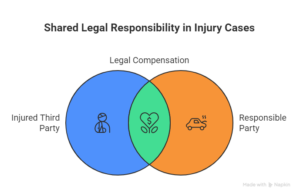
A third-party dram shop claim is filed by someone injured by an overserved patron, while a first-party claim is filed by the overserved person themselves. Third-party claims are far more common and far more successful under Washington law.
Third-party claims apply when you are a driver, passenger, pedestrian, or cyclist who was hurt because a drunk driver had been overserved at a bar before getting behind the wheel. You had nothing to do with their drinking, and the law reflects that. Your claim targets both the driver and the establishment that served them.
First-party claims are filed by the person who was overserved. For adults, these claims are very difficult to win because courts typically hold that an adult patron bears significant responsibility for their own drinking decisions. For minors, the standard is different. If a bar served an underage person who then suffered injuries, that minor may be able to hold the establishment responsible even for harm to themselves.
If the crash followed a bar crawl through Seattle neighborhoods like Capitol Hill or Pioneer Square, multiple venues may have contributed to the driver’s intoxication. Each establishment that served that person while they were apparently under the influence can potentially be named in a dram shop lawsuit Seattle courts will hear.
How Do You Prove a Bar Overserved the Drunk Driver?
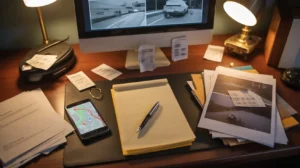
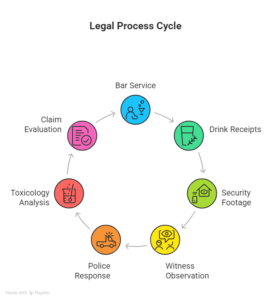
You prove bar overservice through physical evidence tied to that specific night, including receipts, surveillance footage, witness statements, and expert testimony. The challenge is that much of this evidence disappears within 30 days of the incident if no one acts to preserve it.
What Evidence Supports a Dram Shop Case
The strongest bartender overserved drunk driver evidence comes from multiple sources working together:
- Point-of-sale receipts showing the volume and timing of drinks ordered
- Surveillance footage from bar cameras capturing how the patron was behaving before they left
- Witness statements from other customers or employees who observed the driver that night
- Police and toxicology reports from the crash scene documenting blood alcohol content
- Rideshare logs if the patron used an app to arrive at or leave the venue
- Staff training records showing whether employees were certified under RCW 66.20.320
- Social media check-ins or posts placing the driver at the establishment that night
A toxicologist expert can reconstruct the patron’s blood alcohol level at the time they were served versus the time of the crash. This kind of testimony is often what turns a circumstantial case into a compelling one.
Washington also sees a growing number of crashes involving poly-drug impairment, where alcohol and cannabis are combined. Signs of multi-drug impairment can be more subtle than alcohol alone, but the bar’s legal duty to observe and respond to those signs does not shrink. For more on marijuana-impaired driving claims in Washington, read our guide on Seattle Marijuana Impaired Driving Accidents.
Why Timing Is Everything
The three-year statute of limitations under Washington law can create a false sense of time. In practice, surveillance footage is often overwritten within 30 days. POS transaction data may be purged on similar timelines. Employees who witnessed the patron’s behavior move on to other jobs. An attorney can send a legal preservation demand to the establishment requiring them to retain this material before it is gone.
Does Washington Hold Social Hosts Liable Too?
Washington holds social hosts liable only in limited circumstances, specifically when they provide alcohol to a minor. If an adult guest is served at a private event, social host liability does not extend to third parties under Washington law.
This means commercial host negligence Washington claims are much stronger than claims against private hosts. Bars and restaurants are in the business of serving alcohol for profit. That commercial relationship is precisely why the law holds them to a higher standard.
If alcohol was served at a workplace event or a company party, the question becomes whether the employer or host was acting in a commercial capacity. These cases can involve multi-party liability that requires careful analysis of how the event was organized and who controlled the alcohol service.
What Damages Can You Recover in a Washington Dram Shop Case?
You may be eligible to recover both economic and non-economic damages from a successful dram shop claim, depending on the facts of your case.
Economic damages can include current and future medical expenses, lost wages, rehabilitation costs, and long-term care needs. In serious crashes involving catastrophic injuries, vocational experts and life care planners can document the full financial impact on your earning capacity and daily life.
Non-economic damages cover pain and suffering, emotional distress, loss of enjoyment of life, and harm to personal relationships. Washington uses a pure comparative negligence system, which means even if you share some responsibility for the accident, you can still recover compensation reduced proportionally by your share of fault.
In wrongful death cases, surviving family members may pursue both categories of damages against the bar and the drunk driver. Learn more about wrongful death claims in Washington.
Why Elsner Law Firm Is the Right Choice After a Drunk Driving Crash in Seattle
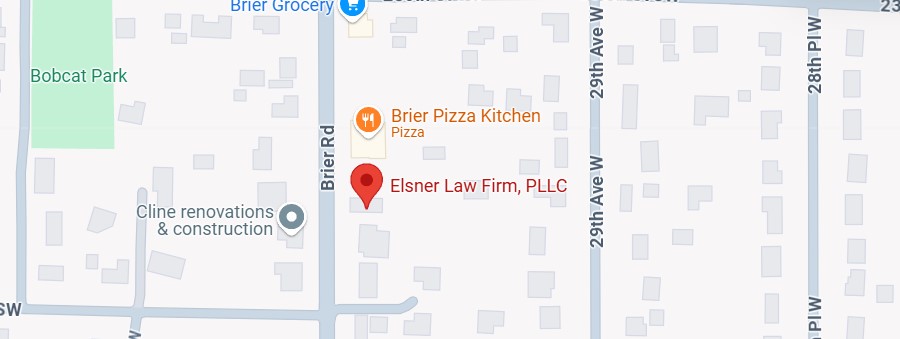
Elsner Law Firm has represented Washington injury victims for over 17 years, with deep experience in drunk driving accidents where commercial host liability is part of the picture. The firm is based in Seattle and serves clients statewide, with additional offices in Brier, Ellensburg, and Pullman.
Every case is handled on a full contingency basis. You pay no fees and no costs upfront. The firm advances all case expenses, and you owe nothing unless compensation is recovered.
24/7 availability: You can call, text, or schedule online at any hour. Evidence preservation cannot wait for business hours, and neither can your legal team.
Expert network: The firm works with toxicologists, accident reconstruction specialists, and medical professionals who strengthen dram shop claims through scientific and forensic analysis.
Trial-ready preparation: Every case is built as if it will go to court. That approach puts real pressure on bar insurers and opposing counsel to settle fairly.
Bilingual support: The firm provides services in Spanish, making quality legal representation accessible to Seattle’s diverse communities.
Proven results: Clients have recovered significantly more than initial insurance offers, including settlements at full policy limits, because of the firm’s thorough evidence work and negotiation strategy.
Frequently Asked Questions About Washington Dram Shop Claims
Can I sue a bar even if the drunk driver has insurance?
Yes. A dram shop claim against the bar is completely separate from your claim against the driver. If the driver’s policy does not cover the full extent of your injuries, a successful claim against the establishment can help close that gap.
What if the bar says their staff did not notice the driver was drunk?
That defense does not automatically succeed. The legal question is whether a trained server should have noticed signs of intoxication, not whether they say they did not. Receipts, footage, and witness accounts often tell a different story than what staff members claim.
Does it matter which bar the driver visited last?
Not necessarily. If multiple venues served the driver while they were apparently under the influence, each one may share liability. An attorney can investigate the full drinking timeline to identify every responsible party.
What if I was partly at fault for the crash?
You can still recover under Washington’s pure comparative negligence system. Your compensation is reduced by your percentage of fault, but you are not blocked from pursuing the claim entirely.
How much does it cost to hire a Seattle dram shop lawyer?
At Elsner Law Firm, nothing. The firm works exclusively on contingency. No fees unless your case wins, and all expenses are covered by the firm throughout the process.
Conclusion
Being hurt by a drunk driver is painful enough. Finding out a bar kept serving that person long after it should have stopped makes it worse. But Washington law gives you a path to hold that bar accountable, and you do not have to chase it alone.
The three-year window may look generous, but the evidence that wins these cases starts disappearing in weeks. Act early, preserve the record, and build the strongest possible case.
Elsner Law Firm serves injured victims across Seattle and all of Washington State. Call or text 206-447-1425 any time, or visit elsnerlawfirm.com/contact to schedule your free case review. No fees. No costs. No risk. Just answers.