CALL US NOW
 TEXT US NOW
Average Dog Bite Settlement Amounts
Dog bite settlements in Washington State range from a few thousand dollars to over one million, depending on injury severity, liability, and documentation. Under RCW 16.08.040, Washington’s strict liability law holds dog owners fully responsible, giving victims a strong legal foundation to recover compensation. This guide breaks down average dog bite settlement amounts in Washington for 2026, what drives them up or down, and how to protect your claim from the start.
Introduction: Navigating Dog Bite Settlements in Washington State
A dog bite can change your life in seconds. One moment you are walking through a Seattle park or visiting a friend’s home in King County. Next, you are dealing with puncture wounds, facial lacerations, infection, and a medical bill that keeps growing. The physical pain is hard enough. The financial stress that follows can feel impossible.
Washington State gives dog bite victims strong legal rights. But knowing those rights and actually recovering fair compensation are two very different things. Insurance companies move fast. Adjusters make lowball offers. And without the right information, victims settle for far less than their injuries are worth.
This guide breaks down average dog bite settlement amounts in Washington for 2026. It covers state law, injury types, claim factors, and what your case may realistically be worth. Whether your injuries are minor or severe, understanding the numbers puts you in a stronger position from day one.
The Growing Concern of Dog Bite Incidents in Washington
Dog bites are a serious public health issue in Washington State. The CDC reports that approximately 4.5 million dog bites occur across the United States each year. In Washington, incidents happen in places people visit daily: public parks in Seattle, sidewalks in King County, apartment complexes, and private backyards. Children are bitten more often than any other group, and many attacks leave victims with permanent scarring, nerve damage, or deep psychological trauma.
The financial and emotional toll is real. Emergency room visits, reconstructive surgery, antibiotics treatment, and rehabilitation therapy add up fast. Many victims also lose wages during recovery. Without knowing your rights, you may accept far less than your case is worth.
Why Understanding Washington’s Unique Laws is Crucial for 2026
Washington follows a strict liability rule for dog bites under RCW 16.08.040. This means a dog owner is legally responsible even if their dog has never bitten anyone before. There is no “one-bite rule” in Washington. You do not have to prove the owner knew the dog was dangerous.
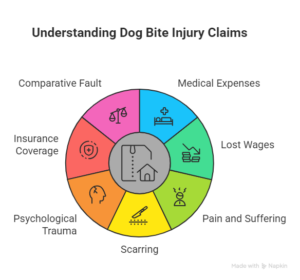
This is a significant legal advantage for victims. But Washington also uses a pure comparative fault system. If you were partially at fault, your settlement amount may be reduced by your fault percentage. In 2026, insurance companies are applying these rules more aggressively. Knowing how they work directly affects the dog bite settlement amounts victims recover.
What This Article Will Cover: Your Guide to Potential Compensation
This guide covers everything you need to know about average dog bite settlement amounts in Washington for 2026. You will learn how state law shapes your claim, what factors increase or reduce your settlement, and how to document your case properly.
You will also find real-world examples of settlements by injury severity, from minor puncture wounds to cases involving facial lacerations, PTSD, and permanent impairment. Whether you were bitten on a public sidewalk in Seattle or on private property in King County, this article gives you the knowledge to protect your rights.
If you were recently bitten, time matters. Evidence disappears. Witnesses forget. The three-year statute of limitations under Washington law means the clock is already running. A Washington dog bite lawyer from Elsner Law can evaluate your case for free, 24/7, with no upfront costs and no fees unless you win.
Washington State’s Distinct Dog Bite Laws and How They Impact Settlements
Washington dog bite law is built to protect victims. The state has some of the strongest liability rules in the country, and those rules directly shape dog bite settlement amounts in 2026.
Strict Liability in Washington: What Dog Owners and Victims Need to Know
Under RCW 16.08.040, Washington imposes strict liability on dog owners. This means if a dog bites you, the owner is responsible. Period. You do not need to prove the dog had a history of aggression. You do not need to show the owner was careless. The bite itself is enough to establish liability.
This applies whether the bite happened on a public sidewalk, in a Seattle park, or on private property. As long as you were lawfully present and did not provoke the dog, the owner bears full legal responsibility. This strict liability standard is one reason why Washington dog bite settlements tend to be higher than states that still apply the one-bite rule.
Pure Comparative Fault: How a Victim’s Actions Can Affect Their Settlement Amount
Washington follows a pure comparative fault system. This means your dog bite settlement amount can be reduced if you were partly at fault for the incident.
For example, if you ignored a warning sign, reached into a fenced yard, or provoked the dog in any way, an insurance adjuster may argue you share some blame. If a court finds you 20% at fault, your compensation is reduced by 20%. A $100,000 settlement becomes $80,000.
The key word is “pure.” Even if you were 99% at fault, you can still recover 1% of your damages under Washington law. But in practice, insurance companies use comparative fault aggressively to lower payouts. This is why documenting your actions at the time of the bite matters enormously.
The Absence of Damage Caps: A Significant Advantage for Washington Dog Bite Victims
Washington State does not cap personal injury damages in dog bite cases. There is no legal ceiling on how much you can recover for pain and suffering, emotional distress, or lost earning capacity.
This is a major advantage. States with damage caps limit non-economic damages, sometimes to $250,000 or $500,000, regardless of how severe your injuries are. In Washington, a victim with permanent facial scarring, PTSD, or long-term functional limitations can pursue full compensation without hitting an artificial limit. High-end verdicts in Washington dog bite cases have exceeded $1 million in severe injury situations.
Washington’s Statute of Limitations for Dog Bite Personal Injury Claims
Washington law gives dog bite victims three years to file a personal injury claim. This three-year limitation period begins on the date of the bite under RCW 4.16.080.
Miss this deadline and your case is almost certainly dismissed, no matter how serious your injuries are. There are limited exceptions, such as cases involving child victims, where the clock may not start until the child turns 18. But waiting is always risky. Evidence disappears. Animal control reports get archived. Witnesses move or forget details. Starting your claim early gives your attorney the best chance to build a strong case.
Anticipated Legal Trends and Interpretations Affecting Dog Bite Cases in 2026
Several trends are shaping dog bite settlements in Washington in 2026. Insurance carriers are increasing scrutiny of non-economic damage claims, particularly emotional distress and PTSD. Psychological evaluations are being used more frequently both by plaintiffs to support claims and by defense teams to challenge them.
Landlord liability cases are also growing. Victims bitten at apartment complexes in Seattle or King County are increasingly pursuing premises liability claims against property owners who knew a dangerous dog was on site. Courts are examining prior dog behavior evidence more closely to determine whether a landlord had notice.
Additionally, homeowner insurance policy limits are a growing concern. As housing costs rise across Washington State, more policies are being scrutinized for umbrella coverage that could increase available compensation. An experienced Washington dog bite attorney tracks these trends and uses them to strengthen your claim.
Core Factors Determining Your Dog Bite Settlement in Washington

No two dog bite cases are identical. Settlement amounts depend on a specific set of factors that insurance adjusters, attorneys, and courts all weigh carefully. Understanding these factors helps you know what your claim may realistically be worth.
Severity and Type of Dog Bite Injuries: Valuing Your Physical and Emotional Harm
The severity of your injuries is the single biggest factor in your dog bite settlement amount. Washington courts and insurance companies evaluate bites using a severity scale ranging from Level 1 to Level 5.
A Level 1 bite may leave no skin break, while a Level 5 involves multiple deep bites, extensive tissue damage, and potentially life-threatening wounds. Injuries like facial lacerations, puncture wounds, nerve damage, and scarring command higher settlements because they affect daily life long after the wound closes. Permanent disfigurement, especially on visible areas like the face or hands, significantly increases non-economic damage value.
Emotional harm matters just as much. Victims who develop PTSD, a persistent fear of dogs, or psychological trauma after an attack can pursue compensation for those losses too. A psychological evaluation from a licensed professional strengthens this part of your claim considerably.
Medical Expenses: Immediate, Ongoing, and Future Medical Care Costs
Medical expenses form the foundation of every dog bite settlement in Washington. These include every cost tied directly to the bite: emergency room visits, hospitalization, rabies prophylaxis, tetanus shots, antibiotics treatment, and any surgeries required immediately after the attack.
But the calculation does not stop there. Future medical costs carry significant weight. If your injuries require reconstructive surgery, plastic surgery, or ongoing rehabilitation therapy, those projected costs are included in your claim. Insurance adjusters will try to minimize future cost estimates. Your attorney counters this by working with medical professionals who can document the full scope of your long-term care needs.
Keep every receipt, invoice, and explanation of benefits. Out-of-pocket expenses, including transportation to appointments and home care costs, are also recoverable.
Economic Damages: Lost Wages and Diminished Earning Capacity
If your dog bite injuries kept you from working, you are entitled to recover lost wages. This covers every workday missed during your recovery period, including partial days and reduced hours.
More serious cases involve diminished earning capacity. This applies when your injuries permanently affect your ability to perform your job. A construction worker in King County who suffers permanent nerve damage in their hand may never return to their previous role. A vocational expert can document this loss and project its financial impact over the remainder of your working life. These calculations can add tens of thousands of dollars to a dog bite settlement amount in Washington.
Non-Economic Damages: Pain, Suffering, and Loss of Enjoyment of Life
Non-economic damages cover the human side of your injury, the part that does not show up on a medical bill. Pain and suffering, emotional distress, loss of enjoyment of life, and loss of consortium are all recoverable in Washington dog bite cases.
Because Washington has no damage caps, these amounts can be substantial. Juries and insurance adjusters consider how the injury has changed your daily life. Can you no longer play with your children? Did you give up hobbies or activities you loved? Do you avoid public spaces because of fear? These are legitimate losses with real value in a personal injury claim.
Strong documentation helps. Journals describing daily pain levels, statements from family members, and records from a therapist all support non-economic damage claims.
Dog Owner Negligence and Liability: Beyond Strict Liability
Washington’s strict liability rule under RCW 16.08.040 covers most dog bite situations. But additional negligence claims can increase your settlement further.
If a dog owner violated a leash law, ignored a prior complaint about their dog’s aggression, or allowed a known dangerous dog to roam freely, that conduct supports a negligence per se claim. This means the owner broke a law designed to protect people like you, and that violation directly caused your injury. Evidence of prior dog behavior, such as animal control reports or neighbor statements, strengthens this argument significantly.
Landlord liability is another avenue. If you were bitten at an apartment complex in Seattle and the landlord knew a dangerous dog was on the premises, premises liability law may hold them accountable alongside the dog owner.
The Critical Role of Insurance Coverage and Policy Limits
Insurance coverage is a practical ceiling on many dog bite settlements. Most homeowner insurance policies in Washington include liability coverage between $100,000 and $300,000. Some dog owners carry umbrella coverage that extends this limit significantly.
When your damages exceed the policy limits, your attorney may pursue additional sources of recovery, including renter’s insurance, landlord liability policies, or personal assets in extreme cases. Understanding the full insurance picture early in your case is essential. An experienced Washington dog bite lawyer reviews all available coverage during the initial case evaluation to make sure no compensation source is overlooked.
Estimating Average Dog Bite Settlement Amounts in Washington for 2026
Dog bite settlement amounts in Washington vary widely. But understanding the ranges, the valuation methods, and the factors that push cases higher or lower gives you a realistic picture of what your claim may be worth.
Understanding the “Average”: Why Every Case is Unique
There is no single average dog bite settlement amount that applies to every case. National data from the Insurance Information Institute shows the average dog bite liability claim paid out approximately $64,555 in 2023. In Washington, where there are no damage caps and strict liability applies, settlements often exceed that national figure.
What drives the number up or down is your specific situation. A minor puncture wound treated in an urgent care clinic in Seattle carries a very different value than a Level 4 attack involving facial lacerations, hospitalization, and reconstructive surgery. Child victim claims tend to settle higher because of long-term scarring impact and emotional harm. Cases with clear owner negligence and strong documentation push toward the high end. Cases with disputed liability, provocation arguments, or limited insurance coverage settle lower.
The word “average” is a starting point, not a ceiling.
How Insurance Companies and Legal Teams Value Claims
Insurance adjusters do not calculate settlements out of generosity. They follow a structured claim valuation process designed to minimize payouts.
Adjusters review medical records, expense receipts, photographs of injuries, police reports, and animal control reports. They assign a multiplier to economic damages, typically between 1.5 and 5, depending on injury severity, to estimate non-economic damages like pain and suffering. A $20,000 medical bill with a multiplier of 3 produces a $60,000 non-economic estimate, bringing the total claim value to roughly $80,000 before any fault percentage reduction.
Legal teams approach valuation differently. Attorneys at firms like Elsner Law build claims from the ground up, using medical professionals, vocational experts, and psychological evaluations to document every loss. This approach consistently produces higher settlement offers. Data shows that dog bite victims represented by an attorney recover an average of 3.5 times more than those who negotiate alone.
A demand letter prepared by an experienced Washington dog bite attorney signals to the insurance carrier that your case is trial-ready. That alone shifts negotiating power in your favor.
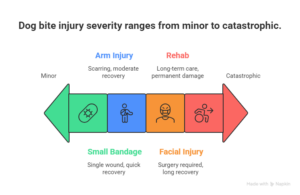
Hypothetical Washington Dog Bite Settlement Examples by Injury Severity
These examples reflect realistic settlement ranges based on Washington’s legal framework and current claim trends. They are not guarantees but illustrate how injury severity and documentation affect dog bite settlement amounts.
Minor Injury Case: An adult victim bitten on the hand at a King County public park suffers a single puncture wound. Treatment involves a tetanus shot, antibiotics treatment, and two follow-up visits. Total medical expenses: $2,500. Lost wages: $800. With pain and suffering included, this case may settle between $8,000 and $15,000.
Moderate Injury Case: A child victim bitten on the arm at a Seattle apartment complex suffers multiple puncture wounds and moderate scarring. Treatment includes an emergency room visit, wound care, and a follow-up with a specialist. Total medical expenses: $12,000. The child misses school and experiences fear of dogs and emotional distress. This case may settle between $40,000 and $75,000.
Severe Injury Case: An adult victim suffers a Level 4 attack on a residential sidewalk in King County. Injuries include facial lacerations, deep tissue damage, nerve damage, and significant scarring requiring plastic surgery and rehabilitation therapy. The victim develops PTSD documented by a psychological evaluation. Total medical expenses: $85,000. Lost wages and diminished earning capacity: $30,000. Pain, suffering, and emotional distress push total damages well above $200,000. This case may settle between $200,000 and $500,000 or proceed to trial for a higher verdict.
Catastrophic Injury Case: A victim attacked by multiple dogs suffers permanent disfigurement, permanent impairment, and requires reconstructive surgery and long-term rehabilitation therapy. Future medical costs are projected at $150,000. Lost earning capacity is documented at $200,000. Non-economic damages for loss of enjoyment of life, PTSD, and psychological trauma are substantial. High-end verdicts in cases like this in Washington have exceeded $1 million.
Projected Influence of Current Trends on 2026 Settlements
Several forces are pushing average dog bite settlement amounts higher in Washington for 2026.
Medical costs continue to rise statewide. Hospitalization, plastic surgery, and rehabilitation therapy are all more expensive in 2026 than they were three years ago. Higher medical bills directly increase economic damage totals and the multipliers applied to non-economic damages.
Awareness of PTSD and psychological trauma as legitimate compensable injuries is growing. Washington courts are increasingly receptive to psychological evaluation evidence, and insurance companies are settling these claims more seriously to avoid trial risk.
Child victim claims are drawing more attention. Families in Seattle and King County are more informed about their rights, and attorneys are building stronger cases around long-term scarring impact and emotional harm in younger victims.
Finally, umbrella coverage claims are rising. As more Washington homeowners carry expanded liability policies, the ceiling on recoverable compensation is higher than it was even two years ago. For victims with serious injuries, this trend matters significantly.
Essential Steps to Take After a Dog Bite in Washington
What you do in the hours and days after a dog bite directly affects your settlement amount. Acting quickly and carefully protects your health, your rights, and the strength of your personal injury claim.
Prioritizing Medical Attention and Comprehensive Documentation
Get medical help immediately. This is the most important step you can take after a dog bite in Washington. Even wounds that look minor can carry serious infection risk. Puncture wounds are especially dangerous because bacteria from a dog’s mouth can reach deep tissue quickly.
At the emergency room or urgent care clinic, tell the medical team exactly what happened. Be specific about the location of the bite, the dog involved, and the sequence of events. Every detail entered into your medical records becomes part of your claim documentation. Request copies of all records, diagnosis notes, and treatment plans before you leave.
Start a personal injury journal the same day. Write down your pain levels, sleep disruption, emotional state, and any activities you cannot perform because of your injuries. Courts and insurance adjusters respond to specific, consistent documentation. Scar photos taken over weeks and months show progression and permanence. Both strengthen your dog bite settlement significantly.
Reporting the Dog Bite Incident to Local Authorities in Washington
Report the bite to local animal control and law enforcement as soon as possible. In Seattle, this means contacting Seattle Animal Shelter or the Seattle Police Department. In King County, contact King County Regional Animal Services.
An animal control report creates an official record of the incident. It documents the dog’s identity, the owner’s information, and any prior complaints about the animal. This report becomes critical evidence in your personal injury claim. It can also reveal prior dog behavior evidence, such as previous bite complaints, that supports a negligence per se argument against the owner.
A police report adds another layer of official documentation. Insurance companies treat cases backed by police and animal control reports more seriously during settlement negotiation. Do not skip this step even if your injuries seem manageable at first.
Gathering and Preserving Essential Evidence
Strong evidence is the backbone of a high dog bite settlement amount in Washington. Start collecting it immediately while details are fresh.
Photograph everything. Take clear images of your wounds from multiple angles immediately after the attack and at every stage of healing. Document the location where the bite occurred, including any leash law signs, warning signs, or fencing conditions. If the attack happened at an apartment complex or on private property, photograph the premises.
Gather witness statements from anyone who saw the attack or arrived shortly after. Names, phone numbers, and written accounts are all valuable. Witnesses forget details quickly, so collect this information the same day if possible.
Preserve all physical evidence, including torn clothing. Keep every expense receipt related to your injury, from pharmacy receipts for antibiotics to transportation costs for medical appointments. Out-of-pocket expenses are recoverable and add up over a recovery period.
Request the dog owner’s homeowner insurance information at the scene. You have a right to this information in Washington. If the owner refuses, law enforcement or animal control can often obtain it through their report.
When and Why to Contact a Washington Dog Bite Lawyer
Contact a Washington dog bite attorney as soon as your immediate medical needs are addressed. The earlier an attorney gets involved, the stronger your case becomes.
Here is why timing matters. Insurance companies assign adjusters to dog bite claims quickly. Those adjusters contact victims early, sometimes within 24 to 48 hours, with settlement offers designed to close the case before the full extent of injuries is known. Accepting an early offer means waiving your right to future compensation, even if complications arise later.
An attorney from Elsner Law steps in between you and the insurance company immediately. With over 17 years of experience handling personal injury claims across Washington State, the firm knows how insurance adjusters evaluate dog bite cases and how to counter their strategies. Clients represented by Elsner Law have recovered up to 6 times the initial insurance offer in some cases.
The consultation is free. It is available 24 hours a day, 7 days a week, by call, text, or online scheduling. There are no upfront costs and no fees unless your case is won. If you cannot travel, in-person home visits are available. There is no reason to face an insurance company alone.
Understanding the Washington Dog Bite Legal Process
Most dog bite cases in Washington resolve through settlement negotiation before reaching trial. Understanding the general process helps you set realistic expectations.
After your attorney gathers medical records, photographs of injuries, witness statements, police reports, and animal control reports, they calculate your total damages. Economic damages, including medical expenses, lost wages, and future medical costs, are documented with precision. Non-economic damages, including pain and suffering, emotional distress, and loss of enjoyment of life, are supported by psychological evaluations and personal testimony.
Your attorney then sends a demand letter to the dog owner’s insurance carrier. This letter outlines liability under RCW 16.08.040, documents all damages, and states a settlement figure. The insurance company responds with a counteroffer. Negotiation follows.
If the insurance company refuses a fair settlement, your attorney may recommend mediation. A neutral mediator helps both sides reach an agreement without going to trial. If mediation fails, the case proceeds to court. Trial risk works both ways. Insurance companies know that Washington juries tend to be sympathetic to dog bite victims, especially child victims and cases involving permanent disfigurement. That pressure encourages fair settlements in most cases.
The three-year statute of limitations means you have time, but not unlimited time. Starting the process early gives your attorney room to build the strongest possible case without the pressure of approaching deadlines.

Conclusion: Protecting Your Rights and Seeking Justice in Washington State
A dog bite is not just a physical injury. It is a financial burden, an emotional setback, and a legal matter that deserves serious attention. Washington law gives you strong rights. Using them effectively is what determines your final settlement amount.
Key Takeaways for Dog Bite Victims in Washington
Washington’s strict liability law under RCW 16.08.040 means dog owners are responsible for bites regardless of prior behavior. There is no one-bite rule to protect them. You do not need to prove negligence to establish liability.
The pure comparative fault system means your settlement can be reduced if you shared any fault. Documenting your actions at the time of the bite protects you from unfair fault percentage reductions by insurance adjusters.
Washington has no damage caps. Victims with serious injuries, including facial lacerations, permanent scarring, nerve damage, PTSD, and permanent impairment, can pursue full compensation without artificial limits.
The three-year limitation period under Washington law is firm. Missing that deadline closes your case permanently. Acting early protects your rights and your evidence.
Dog bite settlement amounts in Washington for 2026 range from as low as $8,000 for minor injuries to well above $1 million for catastrophic cases. Your specific damages, documentation quality, insurance coverage, and legal representation all determine where your case lands in that range.
The Importance of Professional Legal Guidance for Your 2026 Claim
Insurance companies have experienced legal teams working to reduce your payout from day one. You deserve the same level of expertise on your side.
Data consistently shows that dog bite victims represented by an attorney recover significantly more than those who negotiate alone. An average of 3.5 times more. In cases handled by Elsner Law, clients have recovered up to 6 times the initial insurance offer. Full policy limits have been secured in cases where unrepresented victims were offered a fraction of that amount.
Elsner Law focuses exclusively on personal injury law in Washington State. With over 17 years of dedicated experience, the firm handles every aspect of your claim, from gathering medical records and animal control reports to negotiating with insurance adjusters and preparing for trial if necessary. Their network of medical professionals, vocational experts, and psychological evaluation specialists strengthens every case they take.
Offices are located in Seattle, Brier, Ellensburg, and Pullman, giving the firm deep knowledge of local courts, regional insurers, and Washington-specific legal procedures across the state. Every case is built as if it is going to trial. That preparation gives insurance companies a clear reason to settle fairly rather than risk a jury verdict.
The contingency fee structure means you pay nothing unless your case is won. All case expenses are advanced by the firm. There is no financial risk in getting a professional evaluation of your claim.
Empowering Yourself with Knowledge After a Dog Bite Incident
Knowledge is your first line of defense after a dog bite in Washington. Understanding average dog bite settlement amounts, how Washington’s strict liability law works, what factors drive compensation higher, and how insurance companies operate puts you in a position of strength, not vulnerability.
You now know that medical documentation, photographs of injuries, witness statements, police reports, and animal control reports form the foundation of a strong personal injury claim. You know that economic damages like lost wages and future medical costs combine with non-economic damages like pain and suffering and loss of enjoyment of life to determine your total compensation. You know that the absence of damage caps in Washington means serious injuries can result in serious settlements.
What you do next matters. Evidence disappears. Witnesses move on. Insurance adjusters act fast. The sooner you take action, the stronger your position.
If you or someone you love was bitten by a dog in Seattle, King County, or anywhere across Washington State, Elsner Law is available right now. Call, text, or schedule online for a free case evaluation, any time of day or night. Home visits and virtual consultations are available. You pay nothing unless your case is won.
Your recovery starts with one call. Make it today.