CALL US NOW
 TEXT US NOW
If you’ve been struck by an Uber or Lyft while cycling in Seattle, the situation can be more complicated than a typical bicycle accident. Rideshare accidents bring unique challenges, particularly when it comes to liability, insurance, and local laws. Whether you were hit by an Uber driver or involved in a Lyft bicycle crash, it’s essential to understand your rights and the what to do if injured in a rideshare accident.
Cycling is becoming increasingly popular in Seattle, but with the rise of rideshare services, it’s also creating a higher risk of accidents for local residents This guide will explain the legal landscape when you’re involved in a rideshare bicycle accident, outline the steps you should take immediately after the collision, and provide insight into the complex world of insurance claims and legal protections for cyclists.
Introduction: Navigating the Intersection of Rideshares, Bicycles, and Seattle Law
Seattle is known for its bike-friendly streets and commitment to sustainability, but with the growth of rideshare services like Uber and Lyft, the roads are becoming more congested and dangerous for cyclists. As more people choose to cycle through the city, the risk of collisions with rideshare vehicles has sharply increased, creating new challenges for cyclists seeking justice and compensation.
The laws governing these types of accidents are complex and unique. Unlike traditional car accidents, rideshare companies operate with their own set of insurance policies, driver classifications, and responsibilities. Understanding how these factors impact your legal rights after being hit by an Uber or Lyft is critical to securing the compensation you deserve.
The Growing Risk for Seattle Cyclists in the Rideshare Era
Seattle’s cycling community is expanding, with more cyclists taking to the roads to commute, exercise, and reduce their environmental footprint. However, this rise in cycling has come with an increased risk of accidents involving rideshare vehicles. As Uber and Lyft drivers navigate the city’s busy streets, many cyclists face dangerous encounters at intersections, crosswalks, and shared bike lanes.
The combination of distracted driving, high traffic volumes, and unclear rules about rideshare vehicle operations can make cycling in Seattle a perilous experience. Rideshare drivers are often under pressure to pick up passengers quickly, leading to aggressive driving behaviors that put cyclists in harm’s way. This growing risk emphasizes the importance of understanding your rights and how the law protects you if you’re involved in a bicycle vs. Uber accident or a Lyft bicycle crash.
Why Rideshare Bicycle Accidents in Seattle Present Unique Legal Challenges
When it comes to accidents between cyclists and rideshare vehicles, the legal landscape is more complex than in typical bicycle or car accidents. Unlike other types of accidents, rideshare companies like Uber and Lyft are generally seen as independent contractors, not as employers. This distinction complicates the process of determining liability, as the companies themselves may not always be directly responsible for their drivers’ actions.
Additionally, the issue of insurance coverage becomes more intricate. Rideshare drivers often have multiple layers of insurance depending on whether they are actively driving for a ride, waiting for a passenger, or off-duty. For cyclists, this can make filing insurance claims and seeking compensation much more difficult. Understanding the intersection of these factors is essential to successfully navigating the aftermath of a rideshare bicycle accident in Seattle.
Immediate Actions After a Rideshare Bicycle Accident in Seattle
Being involved in a bicycle accident with an Uber or Lyft can be a traumatic experience, but taking the right steps immediately after the collision can greatly affect the outcome of your case. From securing medical attention to documenting the accident, each action you take can help protect your rights and increase the chances of a fair settlement.
Prioritizing Your Safety and Seeking Medical Attention
The first priority after any bicycle accident, especially one involving a rideshare vehicle, is your safety. Make sure to move to a safe area if possible and assess any injuries you may have sustained. Even if you feel fine, it’s crucial to seek medical attention immediately. Many injuries, like internal bleeding or concussions, may not be immediately visible or felt but could worsen over time.
Prompt medical care not only ensures your health and well-being but also establishes a clear record of your injuries, which will be vital when seeking compensation for medical bills and long-term care.
Securing the Scene: Documenting Crucial Evidence
After addressing immediate medical concerns, it’s important to document as much as possible from the accident scene. Take pictures of your bicycle, the vehicle involved, and any visible injuries. If the accident took place at an intersection or near a crosswalk, be sure to photograph any traffic signals or signs that may have contributed to the crash.
Gather contact information from the Uber or Lyft driver, including their insurance details, driver’s license, and vehicle registration. If there are any witnesses to the accident, collect their contact information as well. Having a thorough record of the scene will strengthen your case when seeking compensation.
Calling 911: The Importance of a Police Report and Traffic Collision Report
In Seattle, it’s essential to call 911 after a rideshare bicycle accident. A police officer will arrive to assess the scene, interview involved parties, and create an official traffic collision report. The importance of a police report can serve as an unbiased account of the incident, helping clarify fault and the circumstances surrounding the accident. If you’re able, be sure to provide the officer with all relevant details, including your recollection of the events leading up to the collision. The traffic collision report will be an important document when filing insurance claims or pursuing legal action.
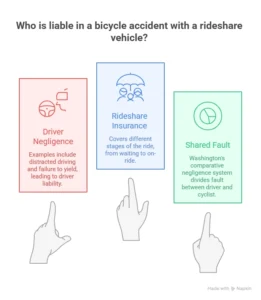
Unpacking Liability: Who is Responsible When an Uber/Lyft Hits a Cyclist in Seattle?
When you’re hit by an Uber or Lyft while cycling, determining who is at fault can be more complicated than a traditional accident. Rideshare vehicles operate under different rules than typical personal cars, and there are several factors that affect liability. Understanding who is responsible for the accident is critical to securing compensation for your injuries and damages.
Driver Negligence: Common Causes of Rideshare Bicycle Collisions
Like any other vehicle on the road, Uber and Lyft drivers are expected to follow traffic laws and drive safely. However, negligence on the part of the rideshare driver is often the cause of bicycle accidents. Common causes of negligence include distracted driving (such as texting or using the app), running red lights or stop signs, failing to yield to cyclists in bike lanes, and speeding.
In some cases, drivers may also fail to maintain proper distance when passing cyclists, violating the three-foot passing rule that’s critical to cyclist safety in Washington State. When an Uber driver is negligent, they are typically held liable for the accident, and you may be able to pursue compensation for your injuries.
The Pivotal Role of the Driver’s App Status (Rideshare Periods)
One of the unique challenges in determining liability after a rideshare bicycle accident is the driver’s app status at the time of the crash. Rideshare drivers are covered by different insurance policies depending on whether they are:
- Offline – Not using the app, and not available for rides.
- Online, Available – Waiting for a ride request but not currently transporting a passenger.
- On a Ride – Actively transporting a passenger to their destination.
If the driver was not on a ride at the time of the collision, they might be covered by their personal insurance, which may not be sufficient to cover your damages. However, if the driver was actively using the app or on a ride, Uber or Lyft’s insurance could cover the accident. Understanding the driver’s status is key to determining which insurance policy applies and how much compensation you can expect.
Shared Fault: Washington’s Comparative Negligence Laws
In some cases, the responsibility for the accident may not fall entirely on the Uber or Lyft driver. Washington State follows a comparative negligence system, meaning that if both parties share fault for the accident, the damages can be divided according to each party’s level of responsibility.
For example, if a cyclist was not following traffic laws (such as riding through a red light or not using hand signals), the court may reduce the cyclist’s compensation. Understanding how comparative negligence works in Washington is crucial when filing a claim, as it may impact the amount of compensation you receive for medical bills, lost wages, and other damages.
Navigating the Complex World of Rideshare Insurance Claims for Cyclists
When you’re involved in a rideshare bicycle accident, understanding how insurance works is essential for getting the compensation you deserve. Rideshare insurance claims can be far more complex than standard car accidents, with multiple layers of coverage and various insurance companies involved. Navigating this maze of insurance policies can be overwhelming, but with the right knowledge, you can better protect your interests and avoid common pitfalls.
The Layers of Insurance Coverage in Rideshare Accidents
Rideshare insurance coverage is divided into several distinct layers, depending on the driver’s app status at the time of the accident. Here’s how it works:
- Personal Insurance (Driver Offline): If the driver is not logged into the rideshare app, they are typically covered by their personal auto insurance policy, which may have limited coverage or higher deductibles, depending on the driver’s policy.
- Rideshare Insurance (Driver Online, Waiting for a Passenger): When the driver is online but not actively driving a passenger, rideshare companies like Uber and Lyft provide third-party liability coverage. However, this coverage often has lower limits and may not be sufficient to cover all the damages if you are seriously injured.
- Rideshare Insurance (On a Ride): If the driver is actively transporting a passenger, Uber or Lyft’s commercial insurance policy takes over, providing more extensive coverage, including higher liability limits and coverage for injury and damage claims.
Understanding these layers can help you determine which insurance policy applies to your case, making it easier to file a claim and seek appropriate compensation.
Common Tactics by Insurance Companies and How to Counter Them
Insurance companies, including those involved in rideshare claims, often try to minimize the payout on your claim. These tactics may include:
- Denying Liability: The insurance company may try to shift blame or claim that the rideshare driver wasn’t at fault, even when clear evidence shows otherwise.
- Underestimating Your Injuries: Insurance adjusters may downplay the severity of your injuries, pressuring you to accept a lower settlement than you deserve.
- Delaying or Stalling: Rideshare insurance companies may attempt to delay your claim, hoping you’ll get frustrated or settle for less money.
To counter these tactics, it’s crucial to document everything, including medical records, police reports, and witness statements. Having an experienced personal injury lawyer on your side can also help protect you from these tactics, ensuring that you get the compensation you deserve.
Types of Damages: Recovering Your Losses as an Injured Cyclist in Seattle
After being hit by an Uber or Lyft while cycling, you may be entitled to various types of damages to compensate for your losses. These damages can be broadly categorized into economic and non-economic damages. Understanding these types of compensation is crucial to recovering the full value of your claim. Whether you’re dealing with immediate medical bills or long-term suffering, both economic and non-economic damages can play a key role in helping you get back on track.
Economic Damages: Quantifiable Financial Losses
Economic damages are the financial losses that you can directly measure and calculate. These damages are typically easier to prove because they are backed by receipts, invoices, or other documentation. Examples of economic damages include:
- Medical Bills: This includes the cost of hospital stays, surgeries, physical therapy, and any ongoing treatment you require.
- Lost Wages: If your injuries have caused you to miss work, you can be compensated for the wages you would have earned during that time.
- Future Earning Potential: If your injury has resulted in long-term disabilities or a diminished ability to work, you may be entitled to compensation for your reduced earning capacity.
- Bicycle Repairs or Replacement: The costs of repairing or replacing your bicycle, especially if it was damaged or totaled in the accident, fall under economic damages.
These damages can have a direct impact on your financial well-being, and it’s crucial to include all receipts and documentation when filing a claim to ensure full compensation.
Non-Economic Damages: Intangible Losses and Suffering
Non-economic damages compensate for the more personal, intangible effects of the accident that can’t be easily quantified with a dollar amount. While harder to measure, these damages are just as important. Examples of non-economic damages include:
- Pain and Suffering: This refers to the physical pain and emotional distress caused by the accident and the recovery process.
- Loss of Enjoyment of Life: If your injury prevents you from engaging in activities you once enjoyed, such as cycling, hiking, or spending time with family, you may be entitled to compensation for the loss of these experiences.
- Emotional Distress: Dealing with the aftermath of a traumatic accident can lead to anxiety, depression, and other emotional struggles that can also be compensated.
- Loss of Quality of Life: In some cases, the accident may leave you with permanent injuries or disabilities, which could alter your ability to live independently or enjoy a normal lifestyle.
Both economic and non-economic damages play an essential role in ensuring that you receive a fair settlement for the full impact of your injuries.
Seattle-Specific Legal Considerations for Cyclists
Cycling in Seattle is governed not only by general traffic laws but also by state and local regulations tailored to protect cyclists on the road. These rules can significantly impact how your accident claim is handled and the type of compensation you may be entitled to. Understanding Seattle-specific legal considerations is essential for ensuring that your rights are fully protected and that you receive the compensation you deserve after a rideshare bicycle accident.
Washington State Bicycle Laws: Rights and Responsibilities of Bicyclists
In Washington State, cyclists have the same rights and responsibilities as other road users, but there are some specific laws designed to keep cyclists safe. Key regulations include:
- Right-of-Way: Cyclists are entitled to the same right-of-way as motor vehicles, especially in bike lanes and at intersections. However, cyclists are expected to yield to pedestrians and follow all traffic signals and signs.
- Three-Foot Passing Rule: Motor vehicles, including rideshare vehicles, must maintain at least three feet of distance when passing cyclists on the road. If an Uber or Lyft driver fails to do so and causes an accident, they can be found liable for the damages.
- Helmet Requirements: In Washington, riders under the age of 16 are required by law to wear a helmet. While it’s not mandatory for adults, it is highly recommended for safety, and failing to wear one could affect the outcome of a claim in the event of an accident.
Understanding these laws not only helps cyclists stay safe but also plays a crucial role in proving liability if you’re involved in an accident.
Seattle Municipal Code and Cycling Infrastructure: How Local Rules and Road Conditions Impact Accidents
Seattle has implemented a number of local laws and infrastructure improvements aimed at protecting cyclists. These include:
- Dedicated Bike Lanes and Paths: Seattle has invested in building and expanding its network of bike lanes and shared-use paths. These lanes are designed to provide cyclists with safer routes, especially in high-traffic areas. However, rideshare drivers may still fail to recognize or respect these lanes, leading to collisions.
- Bike Lane Violations: Seattle Municipal Code prohibits motor vehicles, including rideshare vehicles, from driving or parking in designated bike lanes. If a rideshare driver obstructs a bike lane and causes an accident, they may be found in violation of local traffic laws.
- Crosswalks and Intersections: Cyclists must be aware of Seattle’s unique intersection layouts, which sometimes include marked crosswalks that cyclists must yield to pedestrians. In these areas, rideshare drivers may be more likely to cause accidents due to confusion about right-of-way.
The city’s infrastructure and traffic laws have been designed to create a safer environment for cyclists, but accidents still happen when these rules are ignored. Understanding how local road conditions and the Seattle Municipal Code apply to your case is vital for ensuring fair compensation.
The Indispensable Role of a Seattle Personal Injury Lawyer
When dealing with a rideshare bicycle accident in Seattle, having a knowledgeable personal injury lawyer on your side can make all the difference. The legal complexities involved in these cases, from understanding rideshare insurance policies to navigating Washington State’s laws, require an expert who can ensure your rights are protected. A personal injury lawyer specializing in bicycle accidents can provide invaluable support in securing the compensation you deserve.
Why You Need Specialized Legal Representation for Rideshare Bicycle Accidents
Rideshare bicycle accidents present a unique set of challenges, making it essential to have legal representation that understands the nuances of both cycling laws and rideshare regulations. A specialized lawyer will:
- Understand the complexities of rideshare insurance: Rideshare insurance can be tricky, with multiple layers of coverage depending on the driver’s app status. A lawyer with experience in this area will know how to navigate these policies and fight for maximum compensation.
- Help prove liability: In many cases, proving who is at fault for a rideshare bicycle accident is not straightforward. A lawyer will investigate the circumstances, gather evidence, and work with accident reconstruction specialists to establish the rideshare driver’s negligence.
- Ensure you receive fair compensation: Without legal representation, you may be pressured into accepting a low settlement offer. A personal injury lawyer will fight for the full compensation you deserve, including medical bills, lost wages, pain and suffering, and other damages.
Having a lawyer who specializes in personal injury law and understands the intricacies of rideshare cases will increase your chances of receiving a favorable outcome.
How a Lawyer Helps with Evidence Collection and Documentation
In the aftermath of a bicycle accident, gathering evidence is crucial to building a strong case. An experienced personal injury lawyer will assist with:
- Documenting the scene: Your lawyer can help ensure that all important details of the accident are captured, from photos of the scene to witness statements and the driver’s information. They will know what to look for to strengthen your case, such as traffic camera footage or nearby businesses with security cameras.
- Coordinating with medical professionals: Your lawyer will ensure that your medical records, bills, and treatment plans are accurately documented and linked to your injuries from the accident. This helps establish the extent of your damages and supports your claim for compensation.
- Managing insurance communications: Insurance companies may attempt to manipulate or downplay your claim. A lawyer will communicate with the insurance adjusters on your behalf, ensuring your interests are protected and that you’re not pressured into a settlement that doesn’t fully cover your losses.
Frequently Asked Questions
Q1: What should I do if I’m hit by an Uber or Lyft while cycling in Seattle?
A1: If you’re hit by an Uber or Lyft while cycling, prioritize your safety and seek medical attention immediately. Call 911 to report the accident and ensure a police report is filed. Gather evidence, such as photos of the scene and your injuries, and get the driver’s contact and insurance information. Avoid admitting fault, and contact a personal injury lawyer to help navigate the claims process.
Q2: Who is responsible if I’m hit by an Uber or Lyft while cycling?
A2: Liability in rideshare bicycle accidents can be complex. Generally, the rideshare driver is at fault if they fail to yield the right-of-way or act negligently. However, the rideshare company’s insurance may cover damages depending on the driver’s status at the time of the accident (waiting for a passenger, on a ride, or offline). A personal injury lawyer can help determine fault and secure the appropriate compensation.
Q3: Can I get compensation if I was partially at fault in a rideshare bicycle accident?
A3: Yes, Washington State follows a comparative negligence system. This means you can still receive compensation, even if you are partially at fault. However, your compensation may be reduced based on the percentage of fault assigned to you.
Q4: How does rideshare insurance work in bicycle accidents?
A4: Rideshare insurance provides different levels of coverage depending on the driver’s status. When the driver is offline, their personal auto insurance applies. If the driver is online but not carrying a passenger, rideshare insurance covers you, but with lower limits. If the driver is actively transporting a passenger, the rideshare company’s full commercial insurance applies.
Q5: How can I ensure I receive fair compensation for my injuries after a rideshare bicycle accident?
A5: To maximize your compensation, gather all evidence, including medical records, police reports, and witness statements. Working with a personal injury lawyer who specializes in bicycle accidents can help ensure that you receive compensation for medical bills, lost wages, pain and suffering, and more.
Conclusion: Protecting Your Rights and Seeking Justice as a Seattle Cyclist
Being hit by an Uber or Lyft while cycling in Seattle is a traumatic experience, and navigating the legal and insurance complexities that follow can be overwhelming. However, understanding your rights and taking the right steps can help you secure the compensation and justice you deserve. From seeking medical care to working with an experienced personal injury lawyer, it’s essential to protect yourself at every stage of the process.
A Recap of the Unique Challenges and Essential Steps
Rideshare bicycle accidents come with unique challenges, including understanding rideshare insurance, determining liability, and navigating the complexities of Seattle’s traffic laws. However, by following a few key steps, such as:
- Seeking immediate medical attention
- Documenting the accident scene thoroughly
- Calling 911 and filing a police report
- Understanding the layers of insurance coverage
- Partnering with a specialized personal injury lawyer
You can improve your chances of receiving fair compensation for your injuries and damages. Taking these essential steps will help protect your rights and provide a path to recovery, both physically and financially.
Your Path Forward: Seeking Medical Care and Expert Legal Guidance
If you’ve been involved in a rideshare bicycle accident in Seattle, your next step should be to seek medical care and consult with a personal injury lawyer. Immediate medical treatment ensures your injuries are properly addressed, while a lawyer with experience in bicycle accidents can guide you through the complex legal process. They will handle negotiations with insurance companies, gather necessary evidence, and advocate for your rights.
With expert legal guidance, you can focus on healing while your lawyer works tirelessly to secure the compensation you deserve. Don’t let the complexities of rideshare accidents hold you back from getting the justice and recovery you need, reach out to an Uber and Lyft Accident Lawyer Seattle today.